


Imagine you’re well into a large jigsaw puzzle - and then, when a quarter of it is finished, you discover that the rest of the pieces are missing. That is what this One Ocean Expedition felt like in the Baffin Bay.
It took two and a half years to plan the One Ocean Expedition.
The ship was first supposed to sail to Tromsø in Norway, then across to Iceland, and into the Mediterranean to Nice for the UN Ocean Conference. From there the course would be set north toward Greenland, and then the highlight - through the Northwest Passage to the west coast of Canada, the US, Mexico, and Costa Rica.
Then through the Panama Canal to Colombia, onward through the Caribbean to the USA, and then zigzag back to Norway via Spain, the Azores, France, and Ireland.
Icebergs
Statsraad Lehmkuhl departed Bergen on April 15, 2025, and everything went according to plan until August 8. Then the Canadian authorities said stop.

The ship was crossing Baffin Bay, en route from Nuuk in Greenland to Pond Inlet and the Northwest Passage, when the message came. The unusual heat in the north had removed the sea ice - but at the same time sped up the breakup of the glaciers in Greenland. Large and small icebergs drifted throughout the Northwest Passage, far more than Statsraad Lehmkuhl was certified to handle.

The ship had to turn around, and the detailed plan that Haakon Vatle and his colleagues had prepared went straight into the bin. The practical consequences were major, and the situation could easily have ruined the Statsraad Lehmkuhl Foundation.
More on that later - but first, how do you even plan an expedition like this?
A demanding exercise
– The reason why we planned so many ports on the west coast of North America this time is actually a bit coincidental, says Haakon Vatle.
Haakon is the director of the Statsraad Lehmkuhl Foundation and the expedition leader. We meet him in his combined office and meeting room in Bergen harbour, but with an internal audit underway, he takes us into an empty office to talk.

– The sailing plan was presented to potential partners and adjusted as new partners came on board, Haakon explains.
– During the first One Ocean Expedition, we met people who wanted the ship to come to Seattle, and the same week we returned to Norway, Johan Odfjell from Sustainable Ocean Solutions contacted us and wanted us in San Francisco.
The Ministry of Foreign Affairs was also involved.
– We’re on a global mission with the Norwegian flag on the stern, so we’ve had weekly meetings with consulates and embassies in all the countries we visit. They know their countries well and have helped us with coordination and contact with local authorities.
An important part of the expedition is attracting voyage crew, so Haakon looks for legs that will appeal to them. He also has to take the professional crew’s work schedule into account.
– It’s a very demanding exercise, Haakon says. The crew stays on board for four to six weeks, so we have to think strategically and find ports where it’s easy to fly people in and out.
Herradura Bay in Costa Rica is a good example. There is no pier large enough for the ship, so it must anchor - but at the same time the bay is only an hour’s drive from the nearest international airport.

– We often have events on board, which is positive, but short time in port means busy days for the crew. They have to handle everything while also managing the handover between those arriving and those leaving.
Shipping agents
All ships sailing internationally work with a shipping agent who assists with practical matters on land - provisioning, fuel, and communication with the port and authorities.
– The agents know the port and how things work. But it’s fair to say that it can sometimes be frustrating. Even if we request information well in advance, it often arrives at the last minute. Many of these agents have extremely busy days and must focus on the next ship coming in.
The paperwork is particularly frustrating.
– Everything on board has to be documented, who is on board and every item we carry. It can go into absurd detail, like having to count how many sausages you have on board and clear them through customs. Some countries require an overview of the ports you have visited in the last two years, and may demand documentation if you have been in countries not friendly to the one you now want to enter. It’s a demanding exercise, Haakon sighs.

He has a plea for the shipping industry:
– We’ve now sailed around the world, and it’s clear that the shipping sector would benefit from simplifying the processes around port agents. The paperwork is extreme, and there is no standard. Norway is a major maritime nation, perhaps the Norwegian Shipowners’ Association could take this on? It’s not just us; all ships out there face these challenges.
Could have been a disaster
Back to August 8, and the stop order from the Canadian authorities. It could have been a disaster - not for the ship, but for the Statsraad Lehmkuhl Foundation.
– After two and a half years of planning and millions invested in preparing the ship, it was of course a shock to have to turn around. But the bad luck could have been much worse. Had the message come five days later, we might have been forced to sail straight back to our homeport Bergen, Haakon says.
The crew figured out they could still reach Vancouver on the originally planned date - but only if they went through the Panama Canal, a transit that normally must be booked a year in advance. But Haakon was lucky again.
– Traffic is heavy in the Panama Canal, and if it’s full you have to pay a fortune to pass. But they had an open slot. Pure luck, he says.
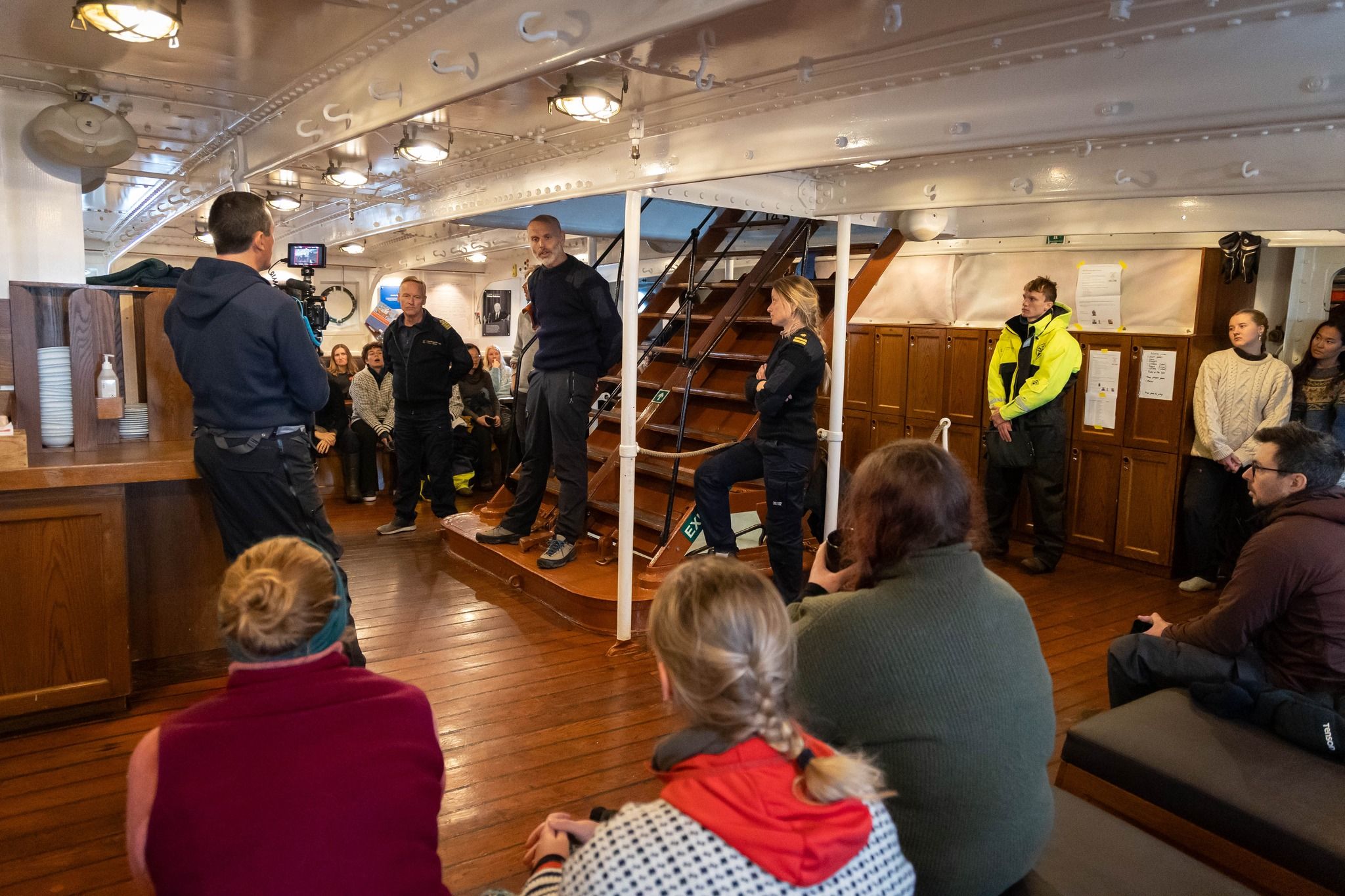
Haakon Vatle breaks the bad news to the students from the Arctic University of Tromsø. Photo: André Marton Pedersen
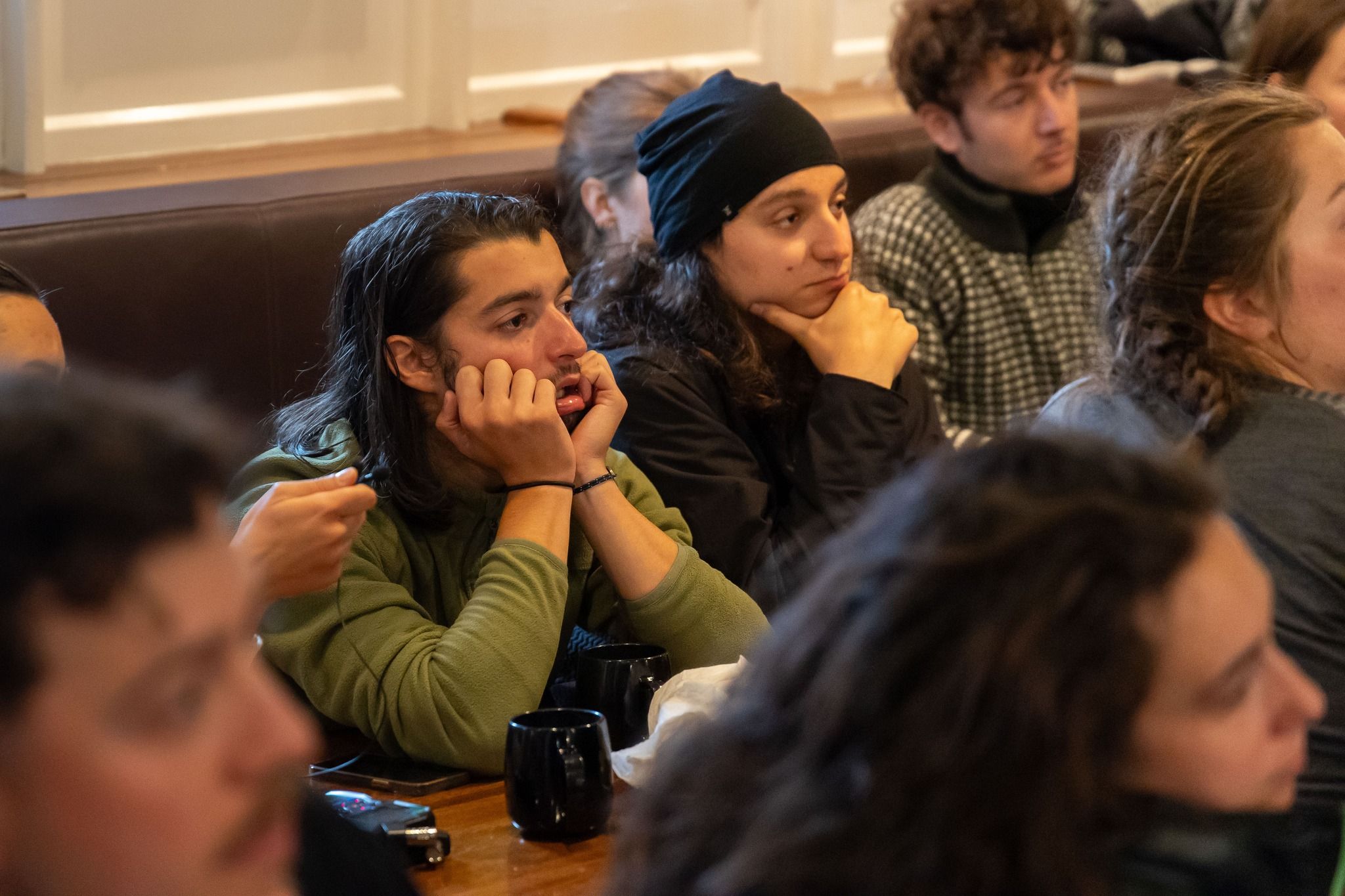
Haakon Vatle breaks the bad news to the students from the Arctic University of Tromsø. Photo: André Marton Pedersen
When Statsraad Lehmkuhl turned around, the first group of students from the Arctic University of Norway was on board, and from Vancouver onward the ship was fully chartered. Had the voyage been cancelled and the ship forced back to Bergen, the economic and reputational damage would have been enormous.
– For me personally, those days up in Baffin Bay were the most dramatic I’ve had in this chair, Haakon says. It could easily have ended with none of us at the Foundation having a workplace anymore. I also thought a lot about our clients. Along the entire west coast, hundreds of people had invested time, energy, and money in the voyage and in conferences in Seattle, San Francisco, San Diego, and La Paz. Canceling would have meant lost income, lost reputation, and lost trust in our ability to deliver. Planning new expeditions would have been extremely difficult.
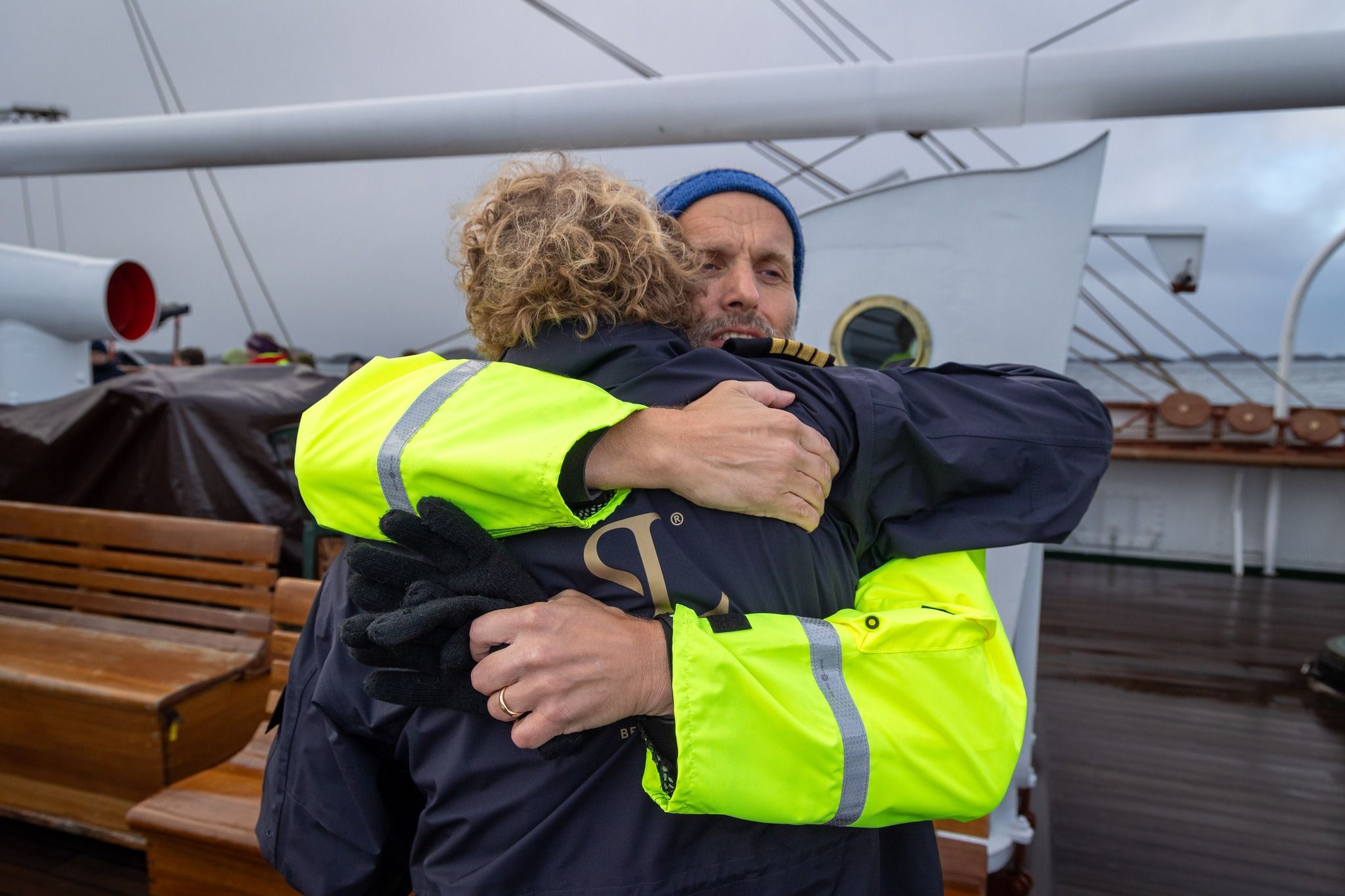
Haakon Vatle leaves the ship to fly back to the office from Nuuk. Chief engineer Morten Thørgersen gets a farewell hug. Photo. André Marton Pedersen.
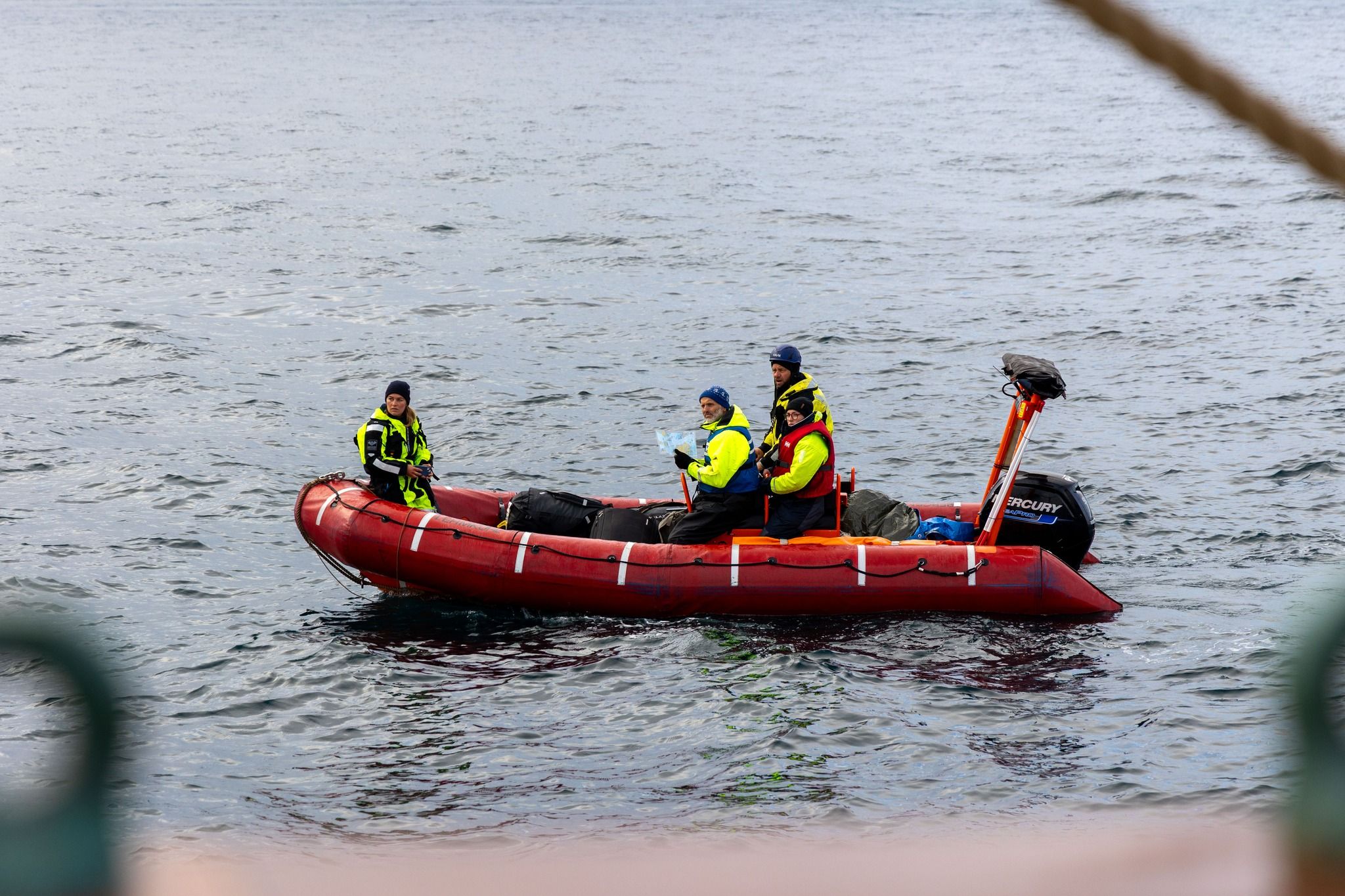
A mob boat takes Haakon on shore. Photo: André Marton Pedersen
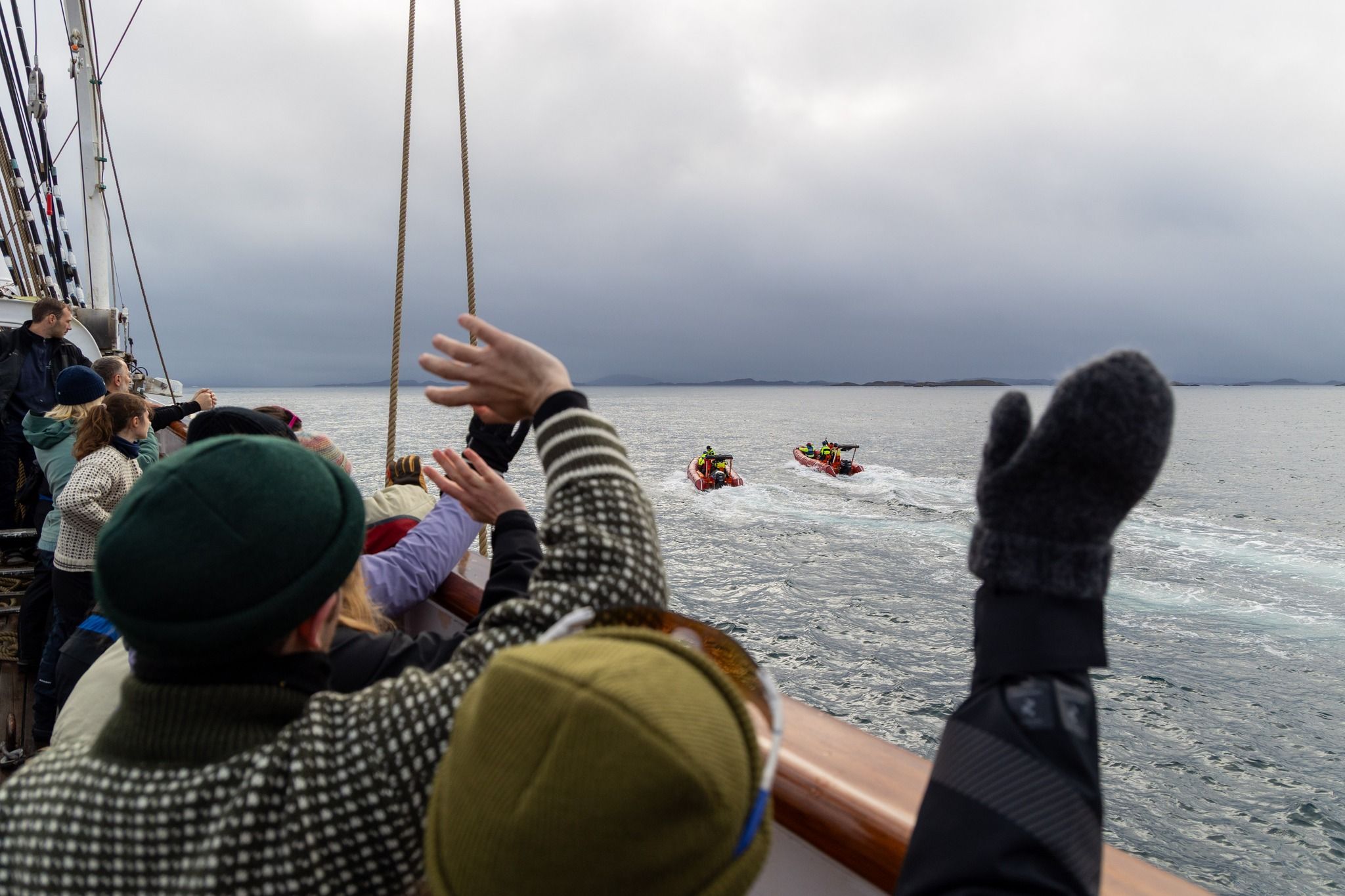
Farewell! Photo: André Marton Pedersen
A new route
Within 36 hours, a new route was ready.
– We could reach Bermuda on the same date we were supposed to be in Cambridge Bay, where there was supposed to be a crew change and a student exchange with the Arctic University of Norway.

The university decided they did not want to stay on board all the way to Bermuda, but disembark in St. John’s, Newfoundland, where they collaborate with a local university. So, the captain adjusted course and sailed to St. John’s. There, Statsraad Lehmkuhl had to stay for two days to avoid sailing into hurricane Eirin.
– It was hurricane season in the Caribbean, but we stayed clear of Eirin and had no further weather-related challenges, Haakon says with a smile.

The Royal Netherlands Naval College was supposed to take over the ship in Whittier, Alaska, and sail south to Vancouver.
– They were informed immediately when we turned in Baffin Bay and were aware of the risk. When we saw we could make it to Los Angeles on the same date we were supposed to be in Whittier, they were very flexible. They rebooked their flights and sailed with us up to Vancouver instead of down to Vancouver, Haakon says.

After Vancouver, everything was expected to go according to plan - but it didn’t.
First, the ship needed an extra stop in Ensenada, Mexico.
– We planned the route before the geopolitical situation shifted, and realized we had chosen the hot spots: Greenland, Canada, the US, Mexico, the Panama Canal and Venezuela. Our Mexican partner, Innovaciones Alumbra, had chartered the ship from San Diego to La Paz and wanted many young people on board - from Mexico, Chile, Honduras, Venezuela, and Brazil. But they had visa issues entering the US. So the solution was to depart San Diego with only the crew and sail directly across the border to Ensenada, where they came on board.

Another “storm”
After La Paz and Herradura Bay in Costa Rica, Statsraad Lehmkuhl passed through the Panama Canal again and into the Caribbean - straight into another “storm”. In August the United States began building up a large naval force in the Caribbean, and January 3. they attacked Venezuela’s capital Caracas and captured Venezuelan President Nicolás Maduro and his wife.
Statsraad Lehmkuhl arrived in neighboring Colombia on December 22, and spent Christmas and New Year moored in Cartagena. The first week of January cadets from the Royal Norwegian Naval Academy was supposed to come on board, and the ship was sheduled to leave for Baltimore, USA, January 9.
But no. Another storm, a real one this time, dumping masses of snow - caused widespread travel disruption across Europe the first week of January. Hundreds of flights was cancelled, with thousands left stranded at airports in Paris and Amsterdam. It took a week before the cadets could leave Norway.
Despite Colombia beeing in high alert due to the US attack on Venezuela, the embarkment went as planned, and Statsraad Lehmkuhl departed Cartagena January 16.
– We were in close contact with the Norwegian embassy in Colombia, and they advised us to adjust the course and sail farther west when leaving Cartagena, Haakon says. There was no immediate danger, but geopolitics is affecting the expedition in a very real way.

Haakon was relieved that the Royal Norwegian Naval Academy was on board through the Caribbean - the Norwegian and US navies maintain close contact.
– It made the voyage even safer, he said.
Stopped bye ice, again
The US city of Baltimore lies far up the Chesapeake Bay and often freezes over in winter. Captain Jens Joachim Hiorth had to reschedule, again.
– It’s currently cold in Baltimore, and the harbour is in the process of freezing over. The cold weather is expected to continue, so this is unlikely to change. Our next port will therefore be Norfolk, he wrote in a message January 31.
Norfolk lies a bit further south, near the entrance to the Chesapeake Bay, so there were no delays this time. Statsraad Lehmkuhl left Norfolk on February 8 as planned, crossed the Atlantic and arrived in sunny Cádiz, Spain, on schedule on March 1. She then set out into the Atlantic again, mooring in Ponta Delgada in the Azores on March 13, one day ahead of schedule.
Then the wind picked up.
... and another storm
Statsraad Lehmkuhl was scheduled to depart for Brest, France, on March 18, but a high-pressure system to the west and a low-pressure system to the east brought storm-force winds from the north.

The strong winds and rough seas forced Captain Jens Joachim Hiorth to wait for better conditions. The weather was being monitored continuously, but it took two days before the captain could give the order to set sail. Statsraad Lehmkuhl
Statsraad Lehmkuhl managed to make up for lost time and arrived in Brest as planned on March 27. The severe weather system “Dave” made the onward passage to Dublin a rough but memorable experience, and the departure from Dublin was also hampered by the weather. A strong low-pressure system north of the British Isles brought gale-force winds to the Irish Sea, and the departure had to be postponed by one day.
Hopefully, the final days of the voyage will go according to plan - with no problems from either the weather or geopolitics.
Proud
Haakon is both proud and grateful as he describes how his team on board and on land has worked tirelessly “unfouling the lines” during this expedition. He spent over ten years organizing large music festivals and has handled unforeseen problems many times. There are two types of people, he says:
– Those who shout “crisis” when something happens - and you can’t work with them. And then there are those who focus on finding a solution. Here, we’re a small organization, and everyone just stepped up. Talk about commitment to the team, says Haakon.
