


“Statsraad Lehmkuhl” is painted in gold letters on the ship’s white hull. This is the story of Kristofer Lehmkuhl – the man it honours.
Kristofer Lehmkuhl was born in Bergen in 1855, at a time when Norway was moving from a fishing and farming society into a modern industrial and maritime nation.
Bergen has a well protected harbour, only a few days’ sailing from major ports further south in Europe. In the mid-13th century the city became part of the German trading alliance known as the Hanseatic League. Stockfish from Northern Norway was shipped here, reloaded, and sent onward into Europe. The short distance to the continent can still be heard in the local dialect: Bergen Norwegian shares intonation, grammar, and many words with German and Dutch.
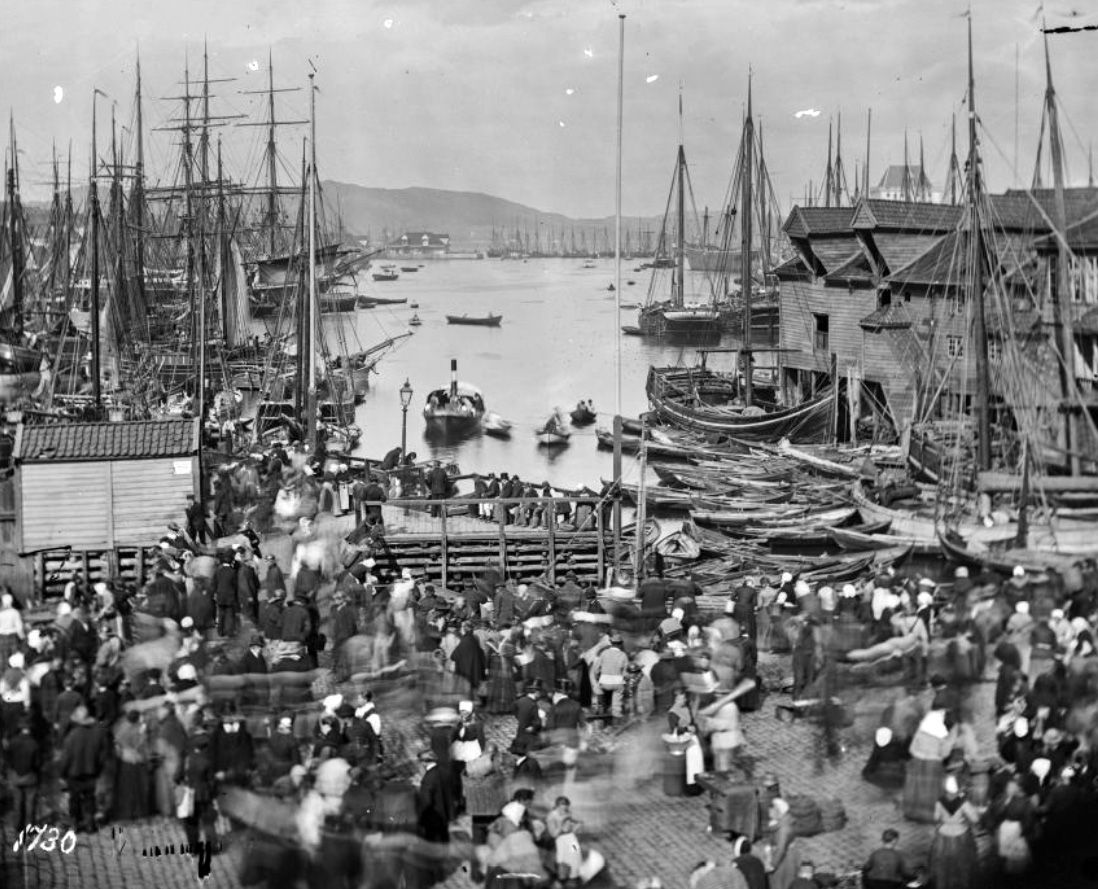
1870: Bergen harbour and the fish marked. Photo: UiB / Marcus
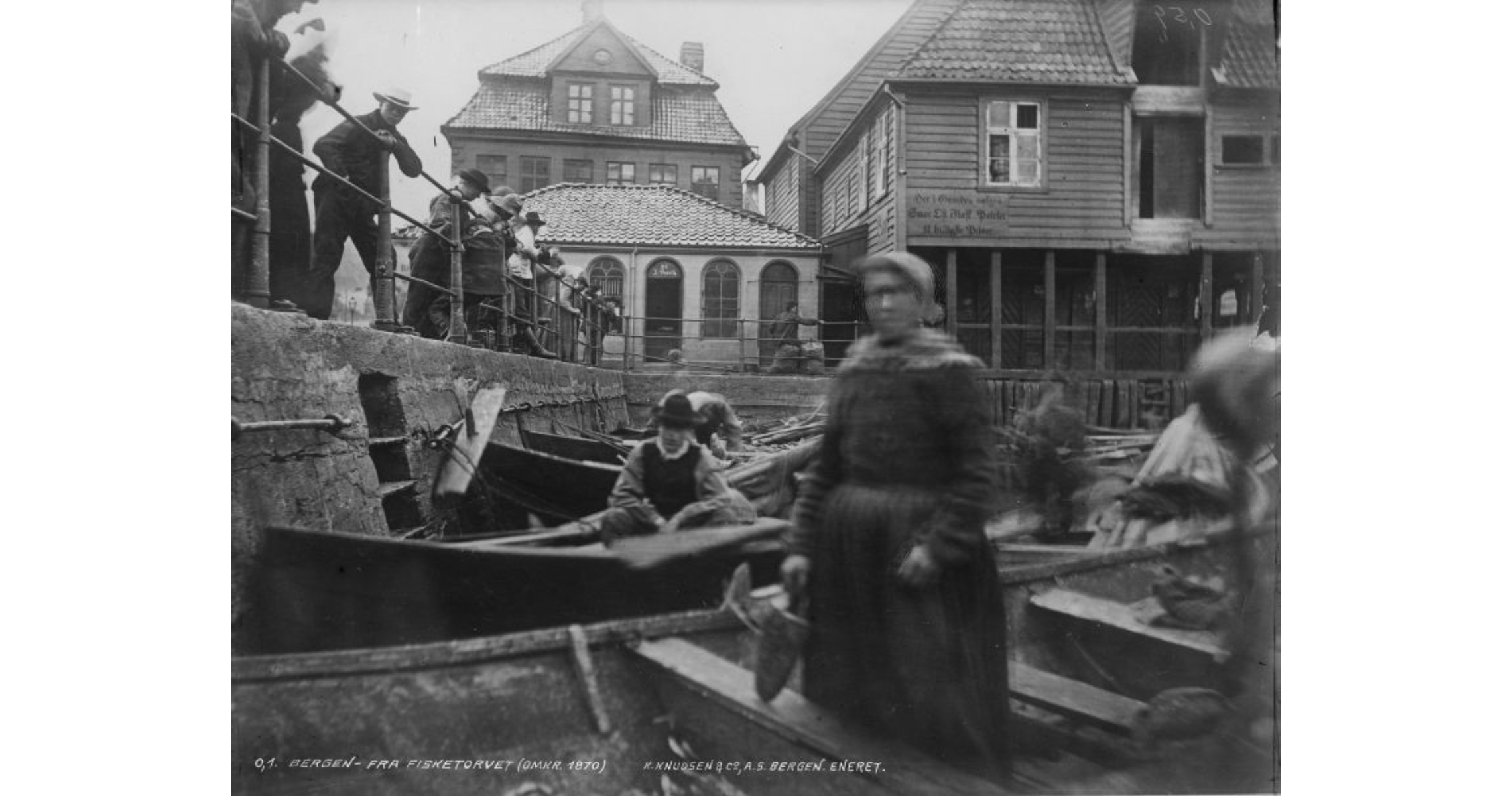
1870: Locals selling fish from their boats at the fish marked. Photo: Marcus / UiB
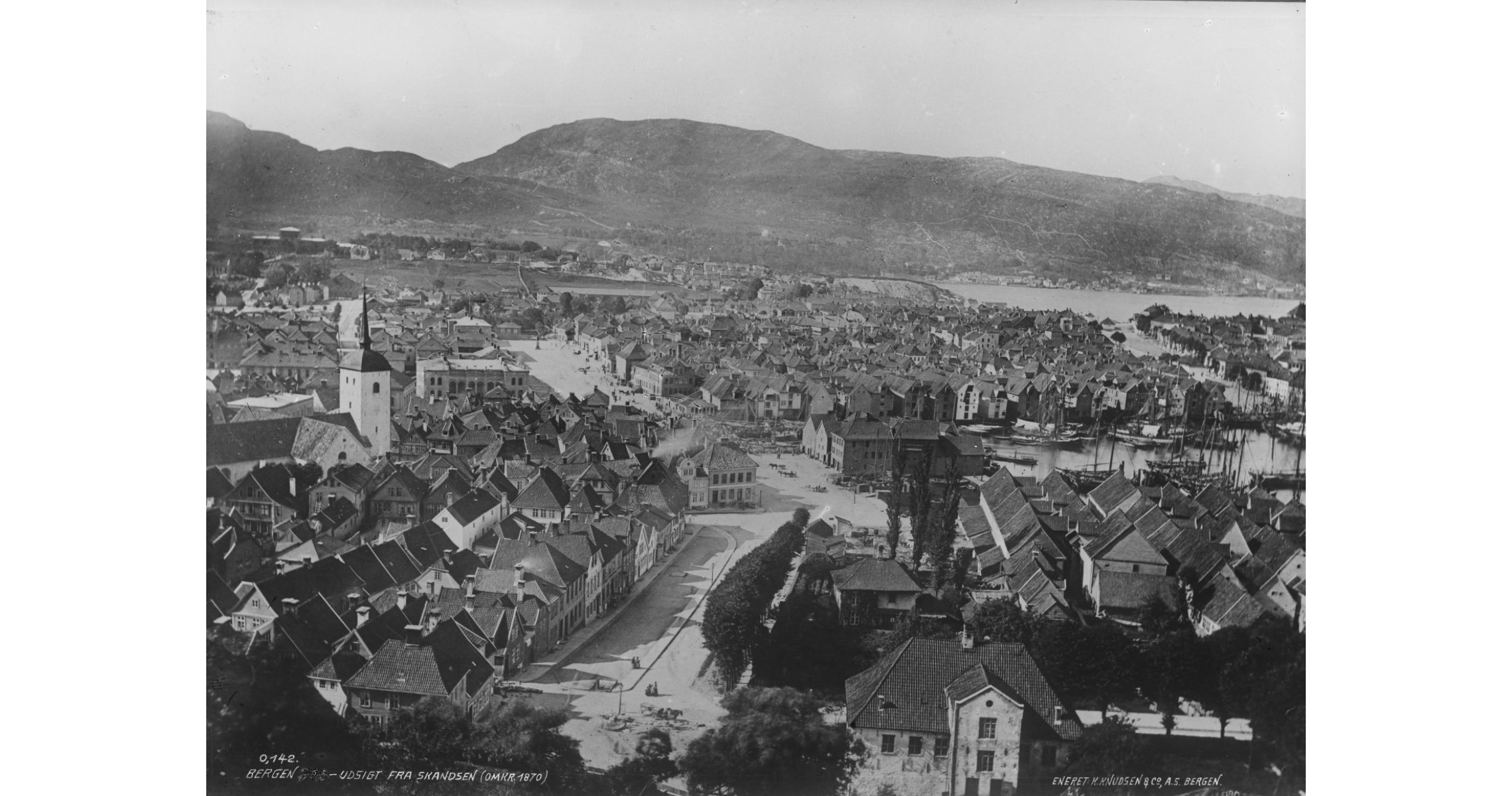
1870: View over the city, the harbour to the right. Photo: UiB / Marcus
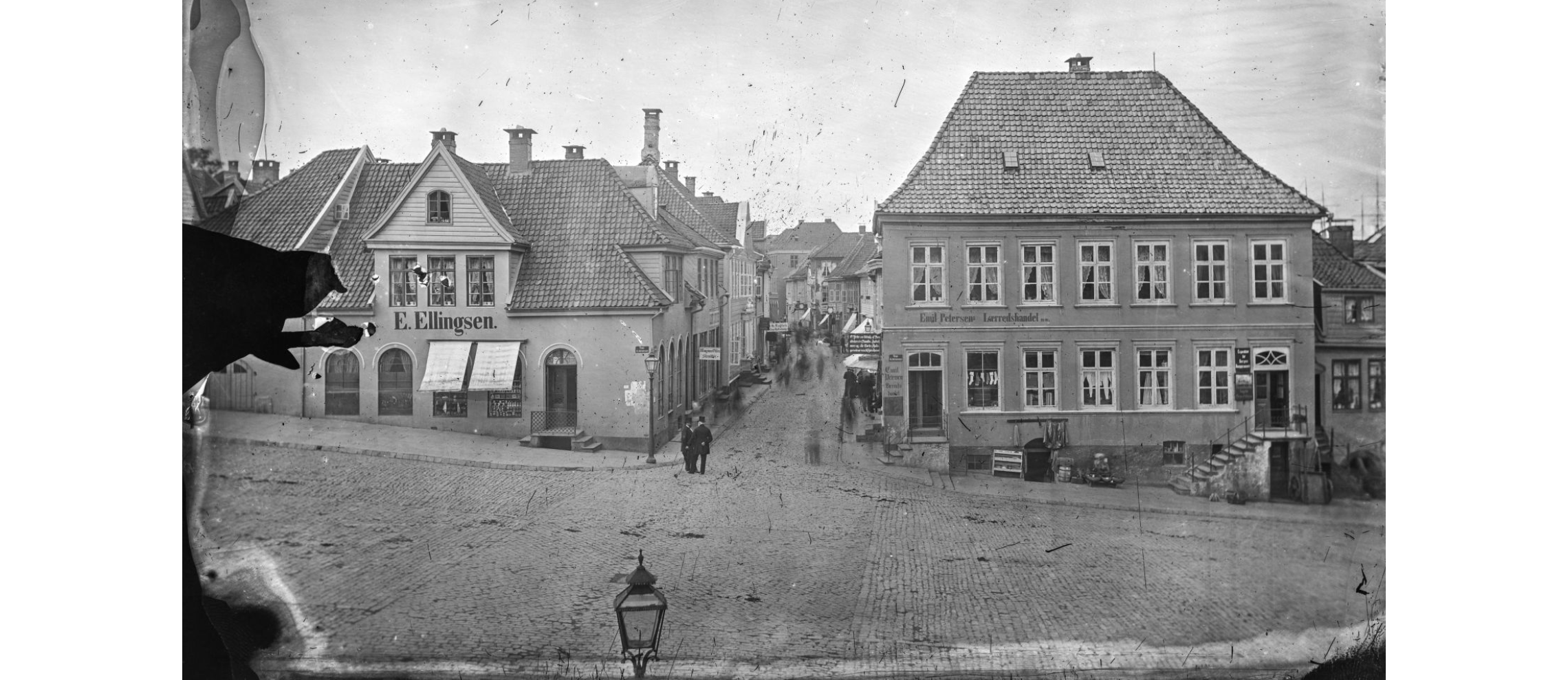
1870: Strandgaten with typical wooden houses. Photo: Marcus / UiB
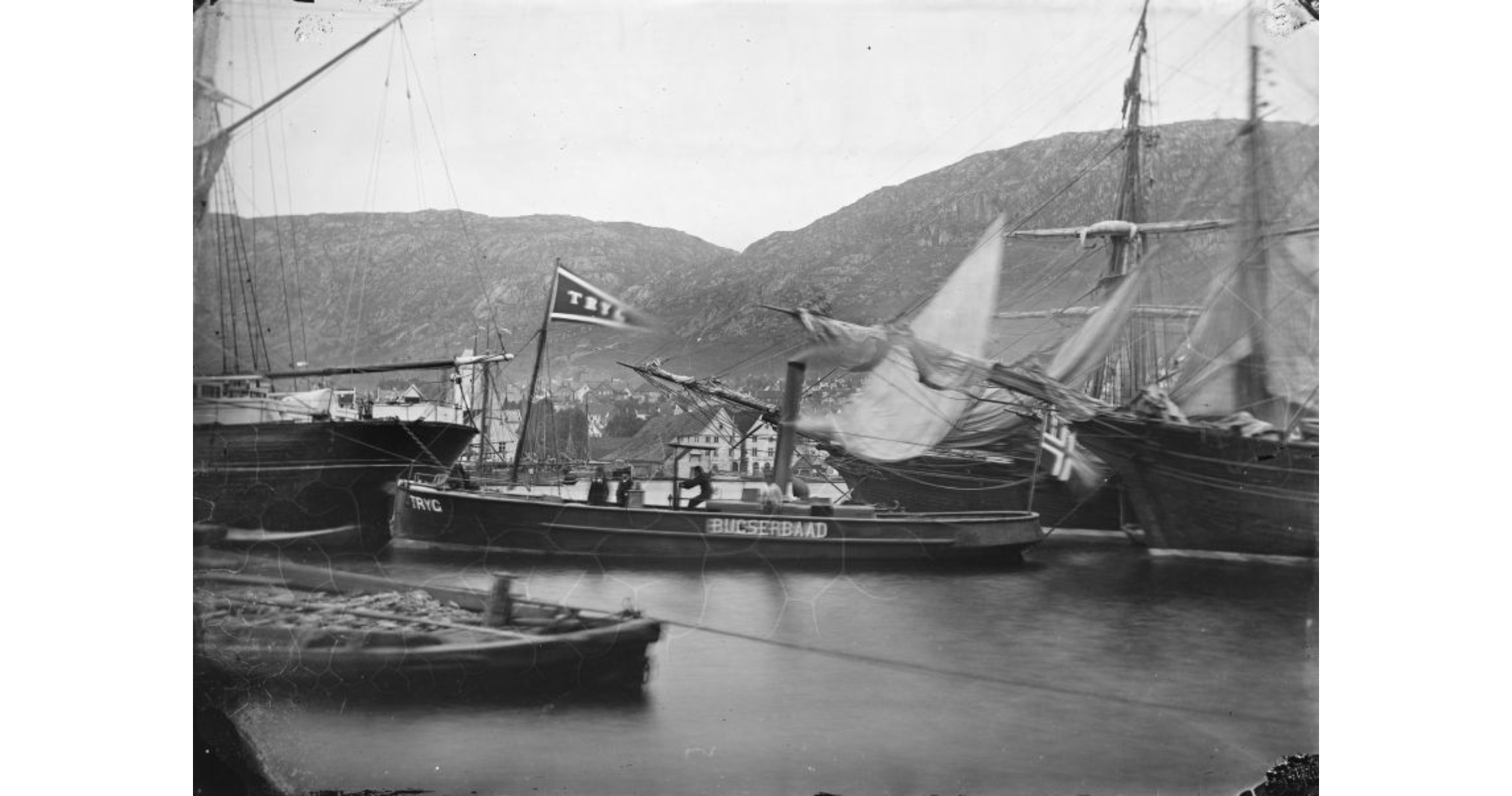
1870: A steam tugboat is at work in the harbour. Photo: UiB / Marcus
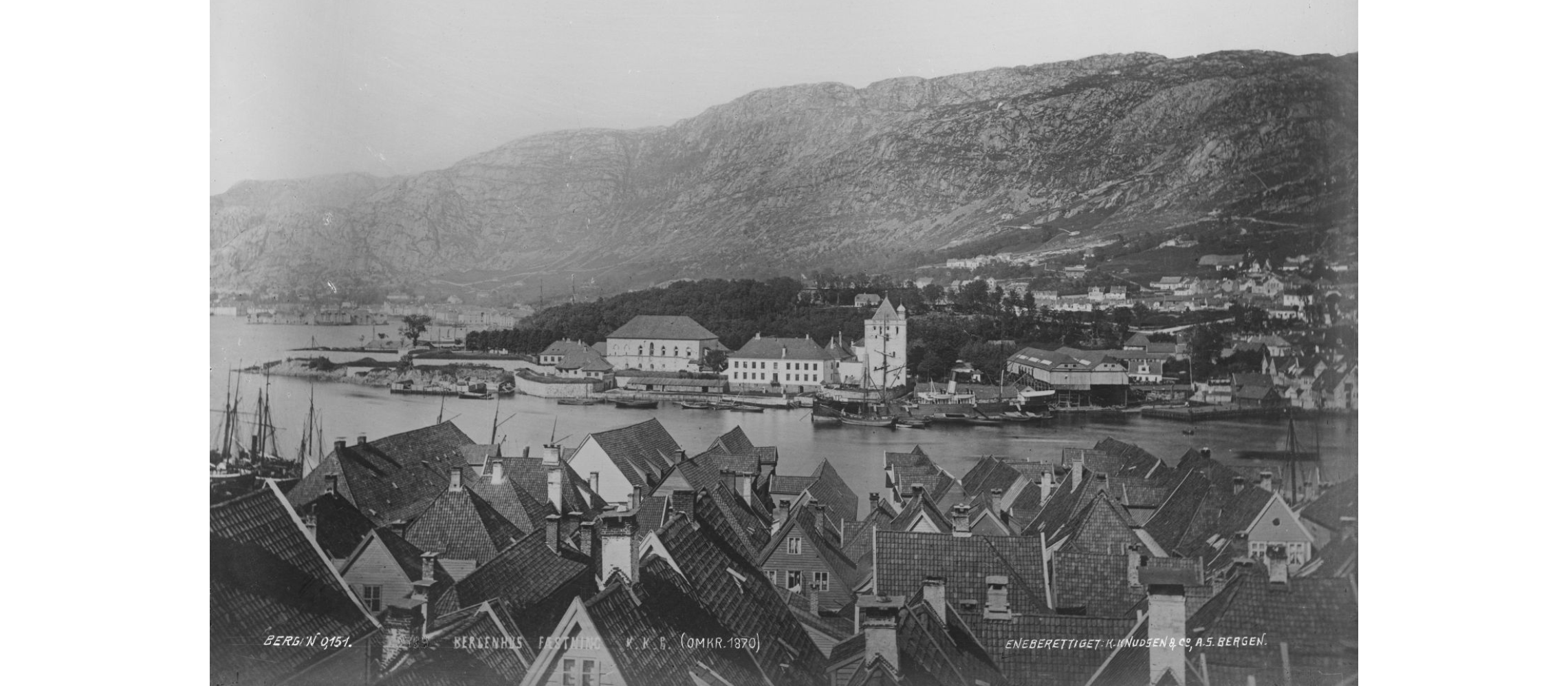
1870: The entrance to the harbour, with the Bergenhus Fortress. Photo: UiB / Marcus
In the 1850s, Bergen had about 23,000 inhabitants. The city lay partly on a peninsula, with mountains surrounding it to the east and west, farmland to the south, and the sea to the north. A medieval fortress dominated the entrance to the harbour, and church towers rose above rooftops of mostly wooden houses. Unlike today, the hillsides were bare, kept open by grazing animals. But what really gave Bergen its special character were the large wooden warehouses, many built on stilts out into the water.
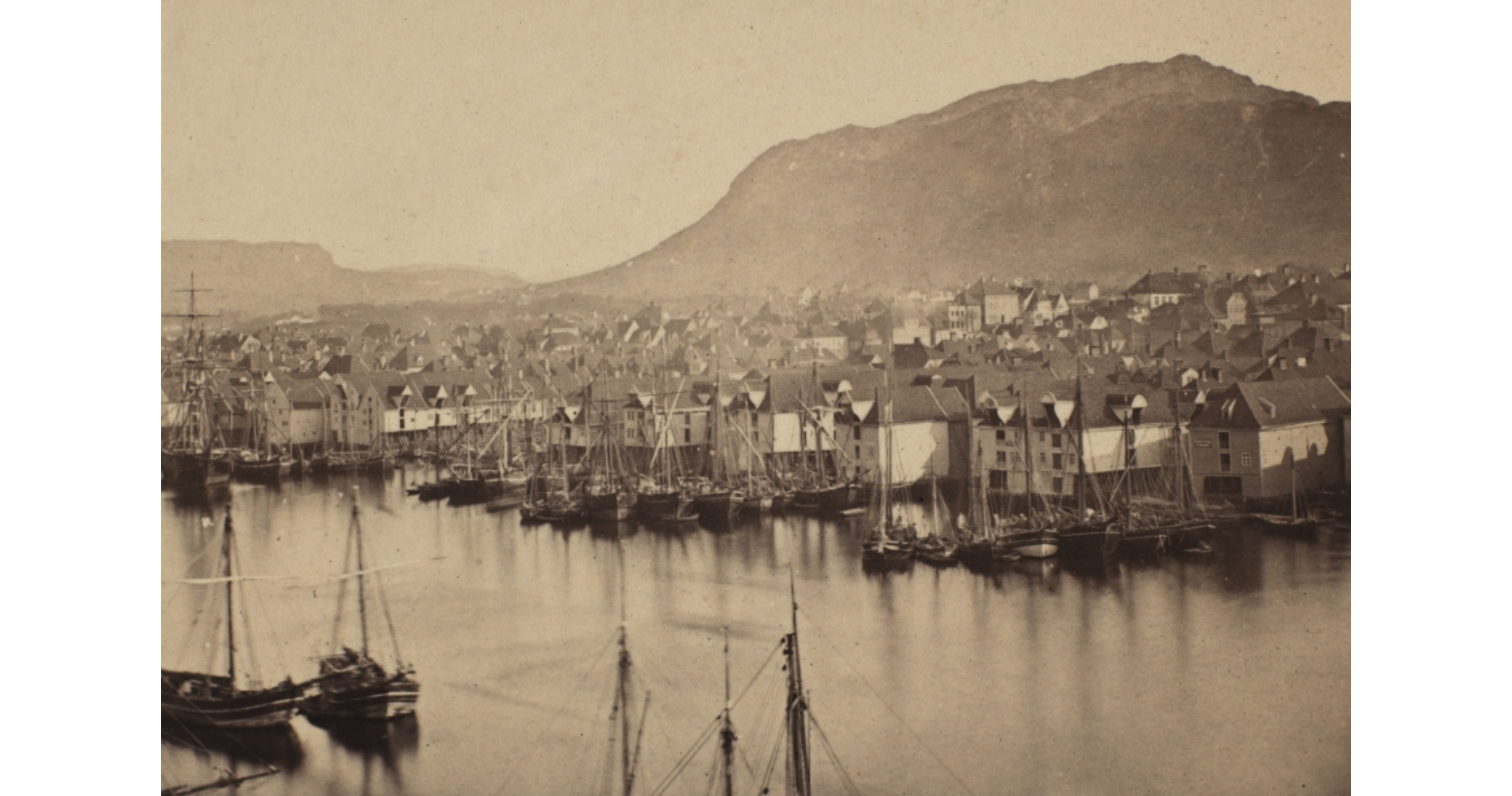
1866: Wooden warehouses in the harbour. Photo: UiB / Marcus
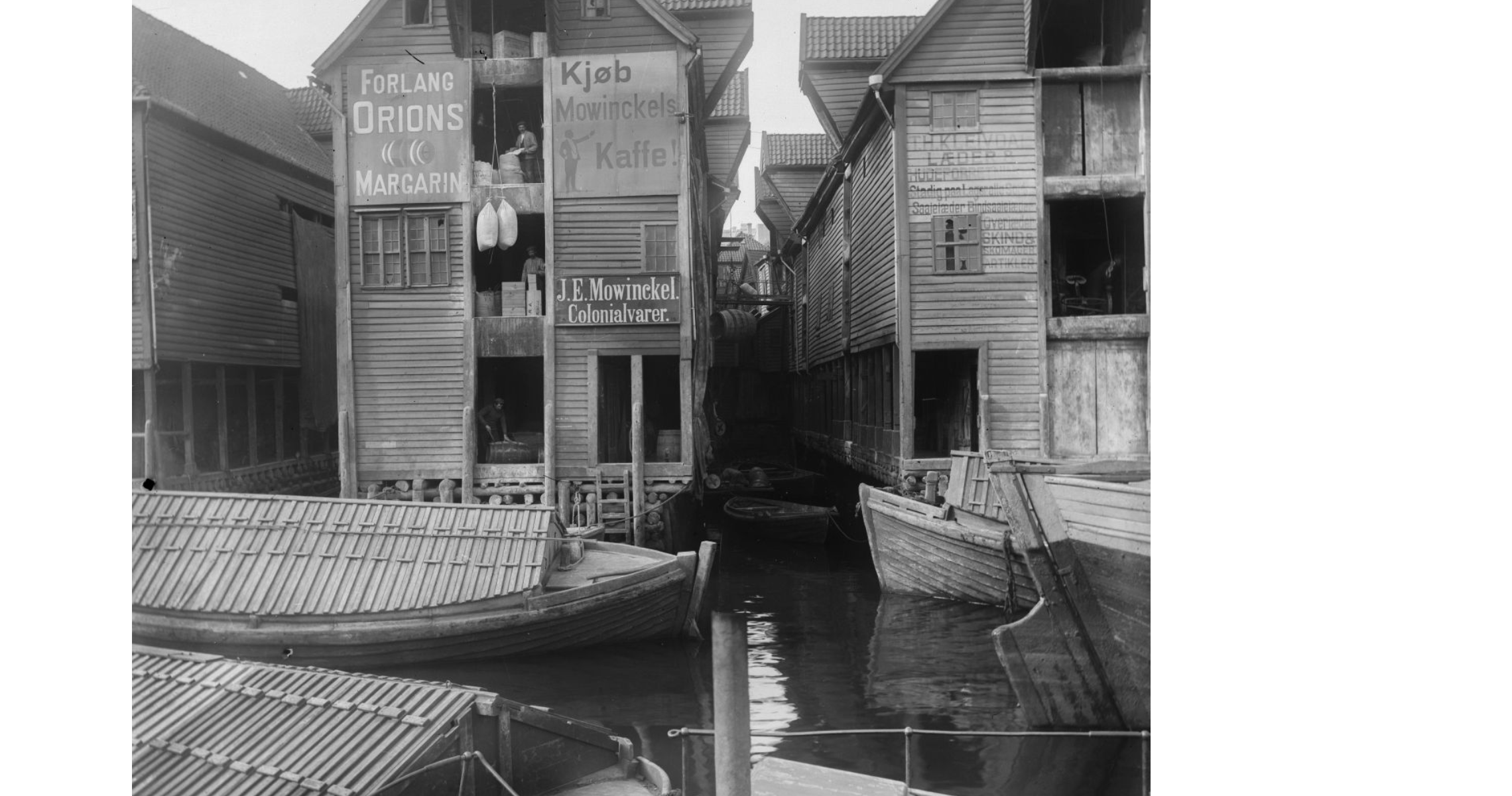
1890: Wooden warehouses in the harbour. Photo: UiB / Marcus
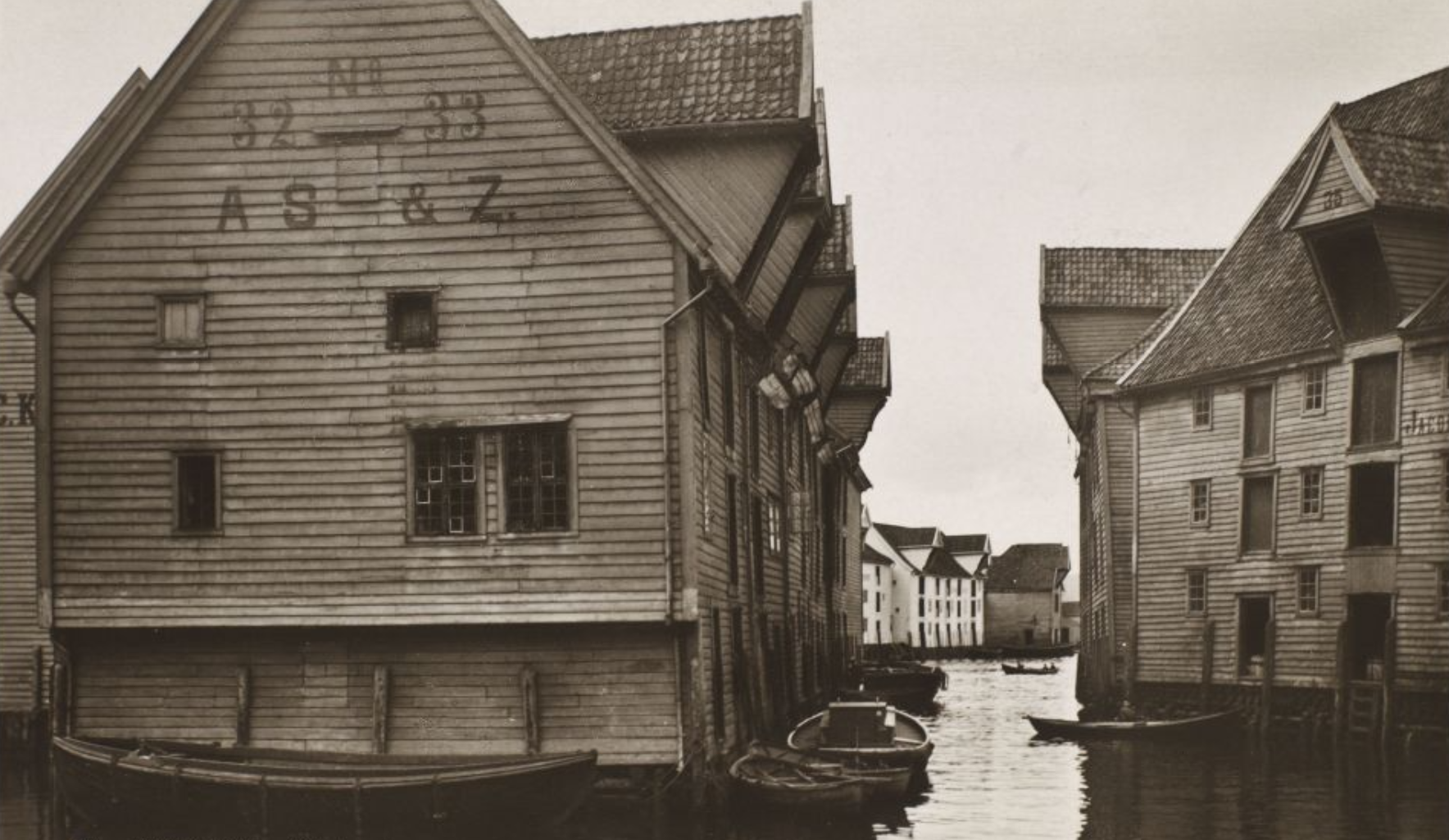
1900: Wooden warehouses in the harbour. Photo: UiB / Marcus
Today, Bergen has nearly 300,000 inhabitants and has grown far beyond its original boundaries. The city has expanded around the mountains and across former farmland and pastures. Several major fires, the last in 1916, destroyed much of the old wooden city. Sadly, most of the Bergen that existed in the 1850s is now gone.

A well-known exception is Bryggen, the row of long wooden buildings that served as offices and warehouses for the Hanseatic merchants. Bryggen is a protected site and is listed as a UNESCO World Heritage Site.
Networks
Kristofer Lehmkuhl was named after his grandfather, Christopher Diedrich Lehmkuhl. Christopher came to Bergen from Bavaria around 1800 to trade in stockfish and herring. Kristofer’s father, Joachim, joined the family business, and later Kristofer did the same.
Many well-known Bergen families, such as Mowinckel, Krohn, and Mohn, also arrived from Germany during the 1800s. They brought spirit, new ideas, and capital - and they built strong business networks, often strengthened through marriage. Merchants, bankers, and shipowners became closely connected.

The Lehmkuhl family were no exception. In 1886, Kristofer Lehmkuhl married Magdalena Michelsen. She was the sister of shipowner and later prime minister Christian Michelsen, and the daughter of Jakob Michelsen, head of the Bergen Stock Exchange. Through family and business, Lehmkuhl quickly gained strong connections in Bergen’s commercial life.
Exhibitions
Lehmkuhl became deeply involved in the Society for the Promotion of Norwegian Fisheries, at the time the most important association for Norway’s fishing industry. As its leader, he helped organise Norway’s participation in the World Exhibitions in Barcelona and Paris in 1888 and –89, and in Chicago in 1893.
These experiences inspired him to take the initiative for a major national exhibition in Bergen.

The exhibition was first planned in the city centre. The building known as Permanenten was constructed to house permanent exhibitions. Because of limited space, the main exhibition was moved to the public park Nygårdsparken.
The National Exhibition opened on 16 May 1898, attended by Crown Prince Oscar and Bergen’s mayor, Christian Michelsen. The exhibition was a huge success. A large exhibition hall was built, along with a restaurant, pavilions, and other temporary buildings.
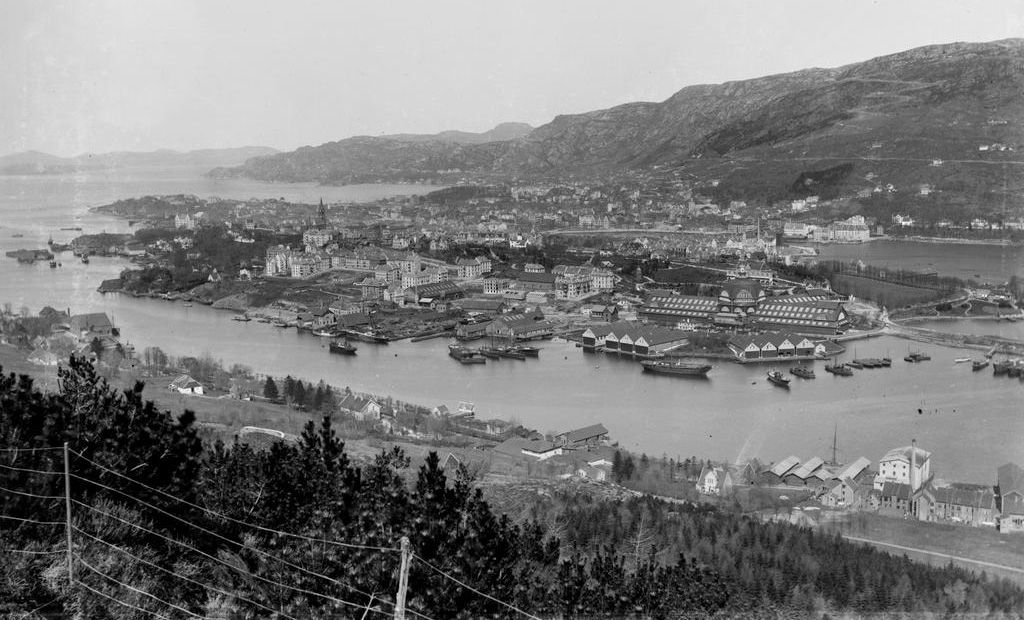
1898: The exhibition sees from the west. Photo: UiB / Marcus
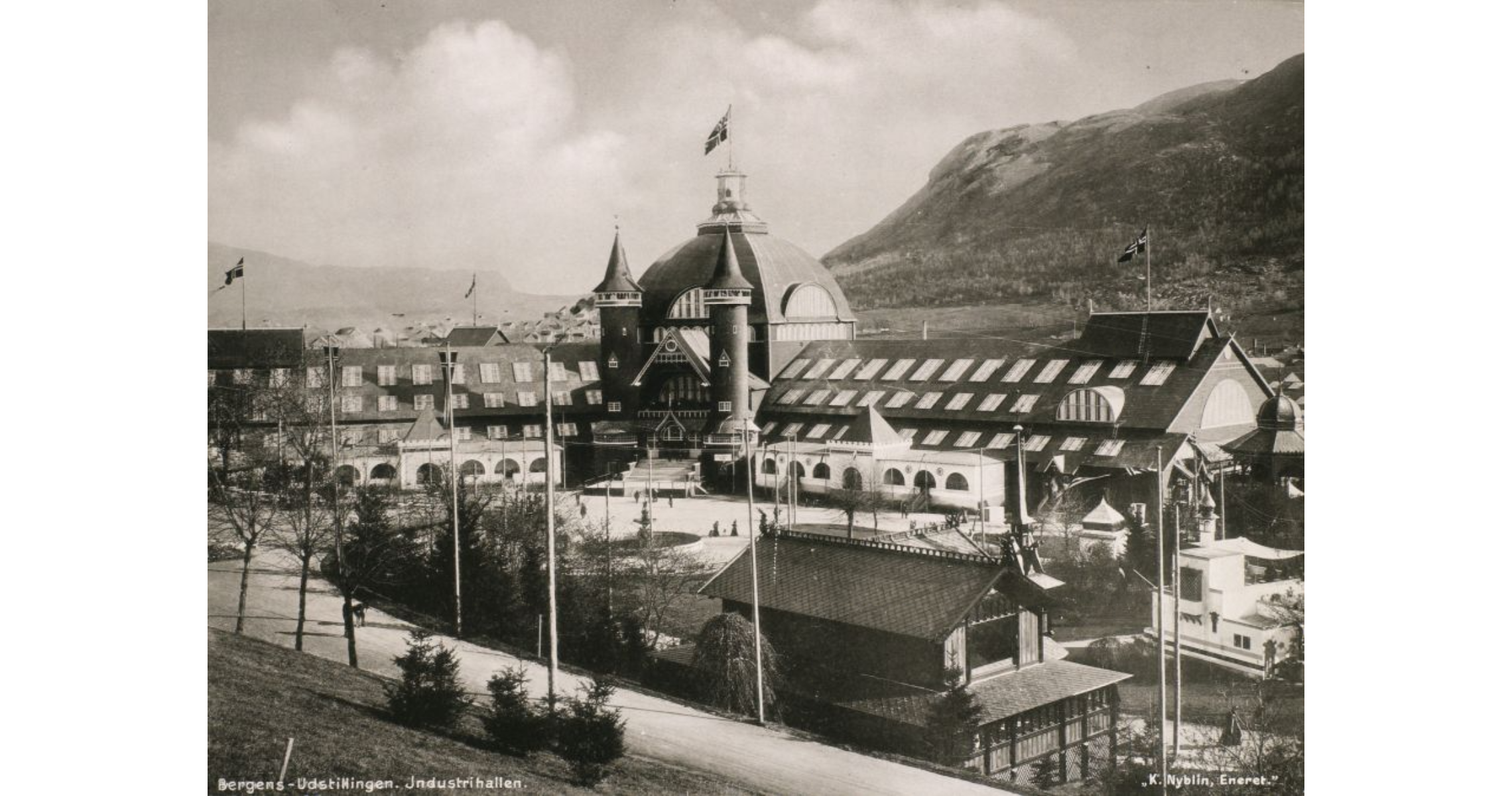
1898: The main exhibition hall. Photo: UiB / Marcus
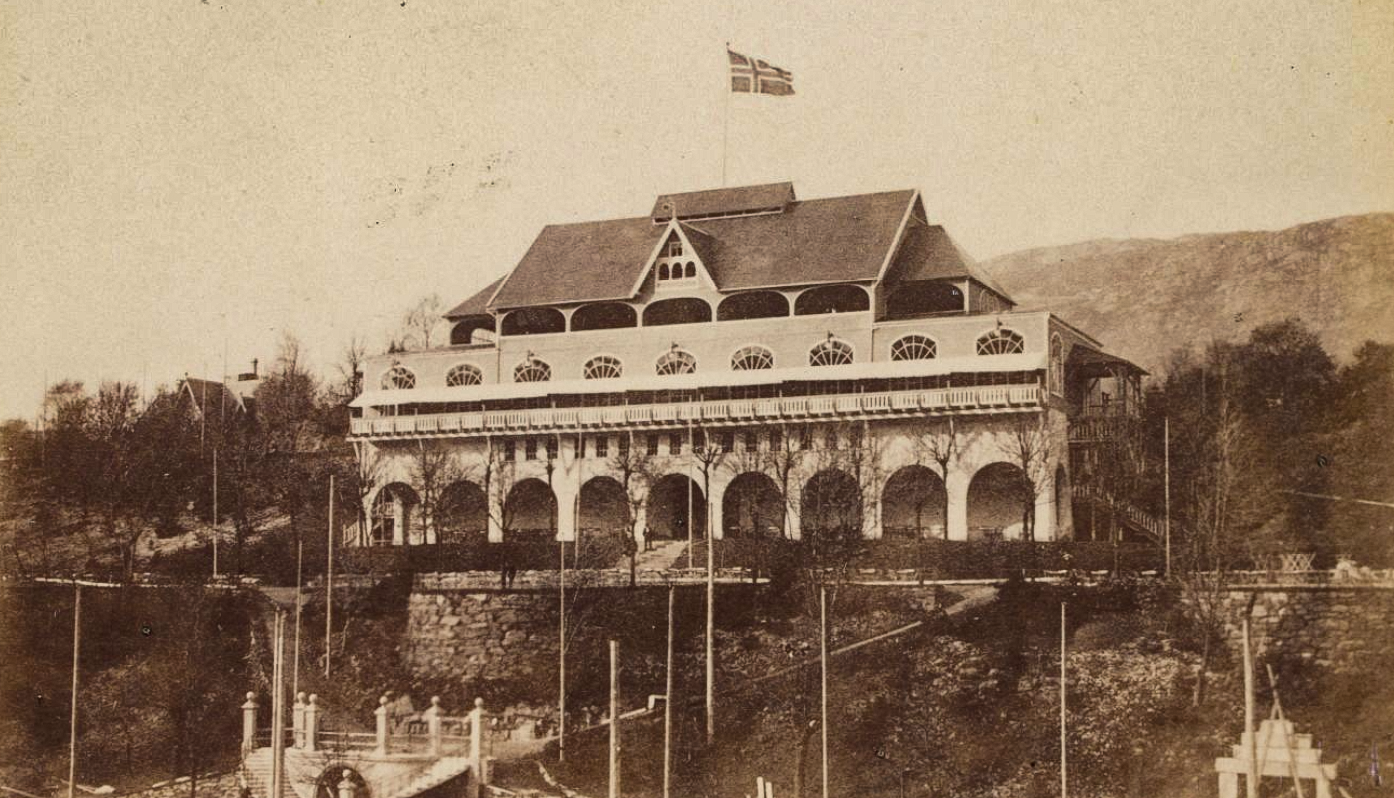
1898: The restaurant Photo: UiB / Marcus
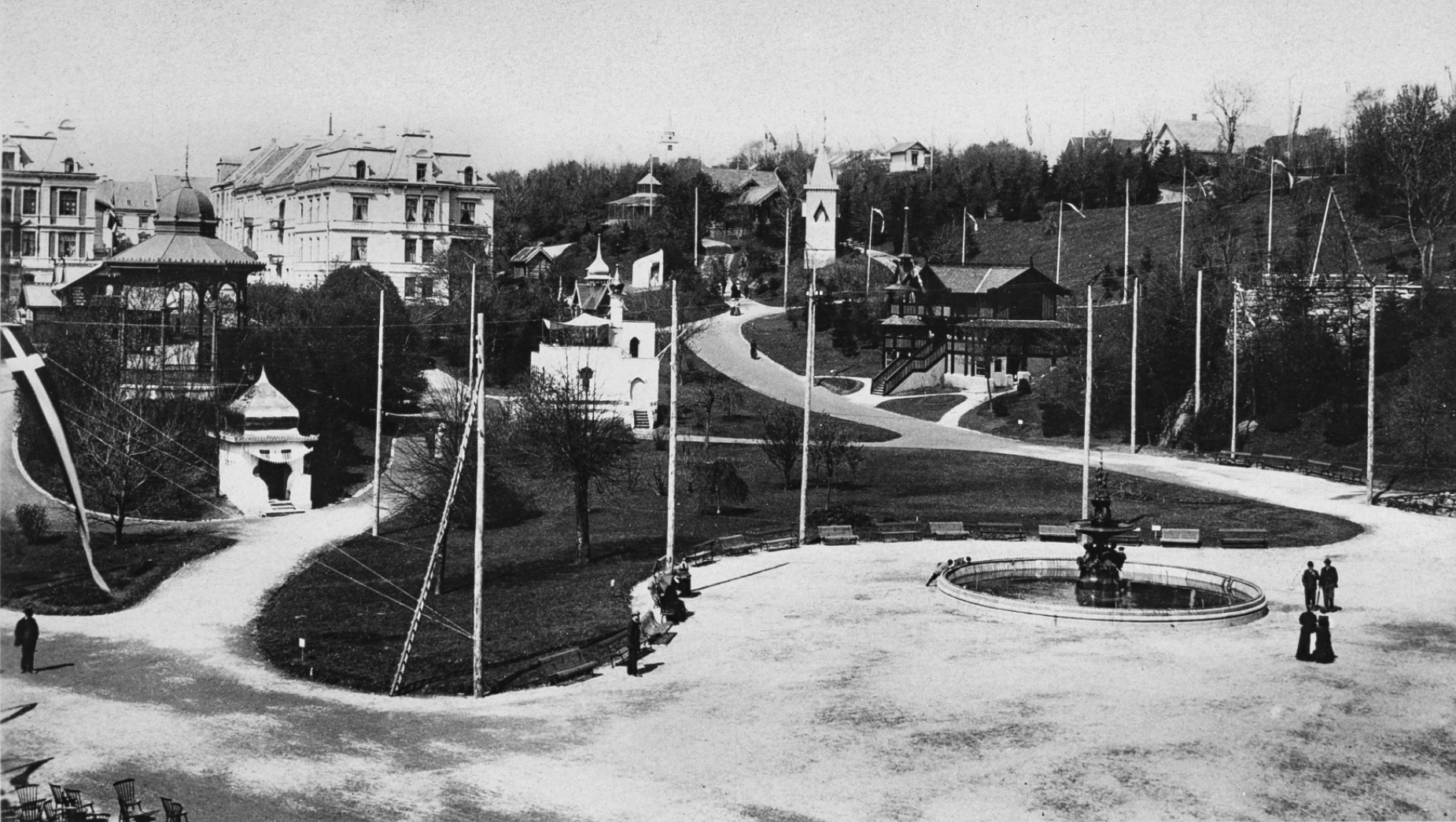
1898: Part of the exhibition area. Photo: UiB / Marcus
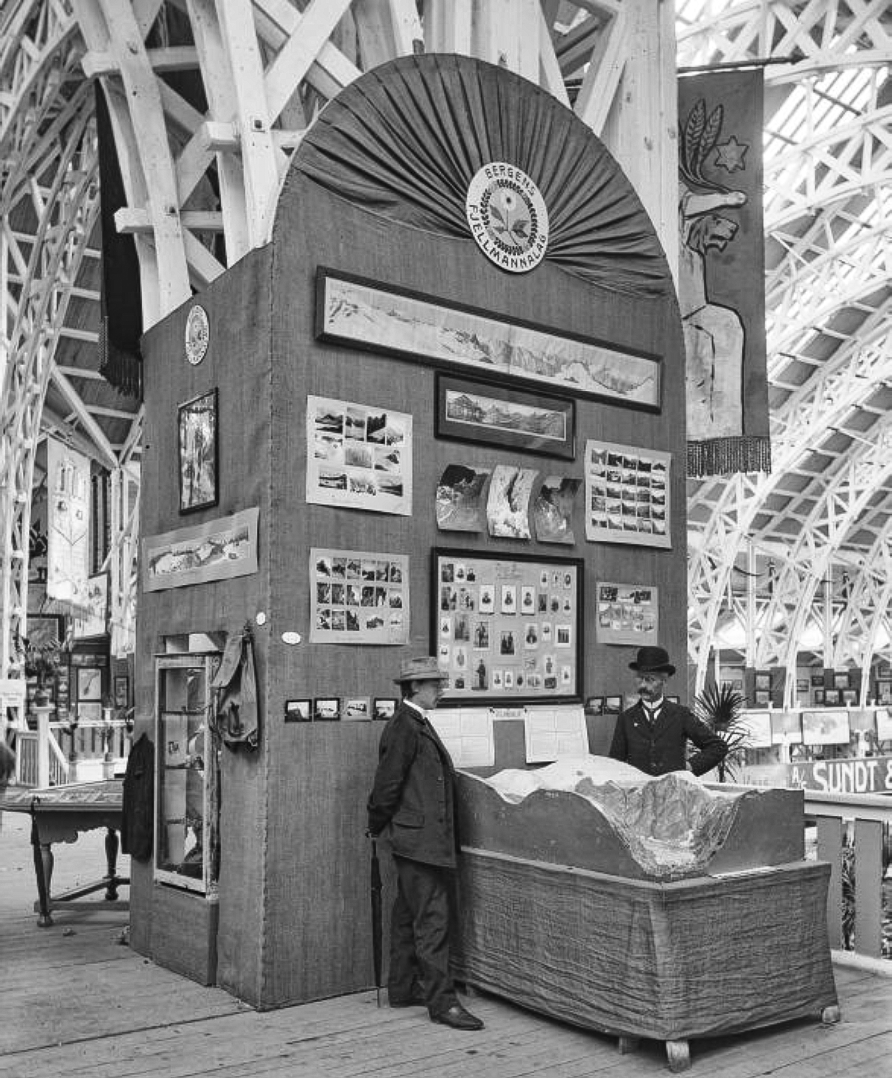
1898: Inside the main exhibition hall. Photo: UiB / Marcus
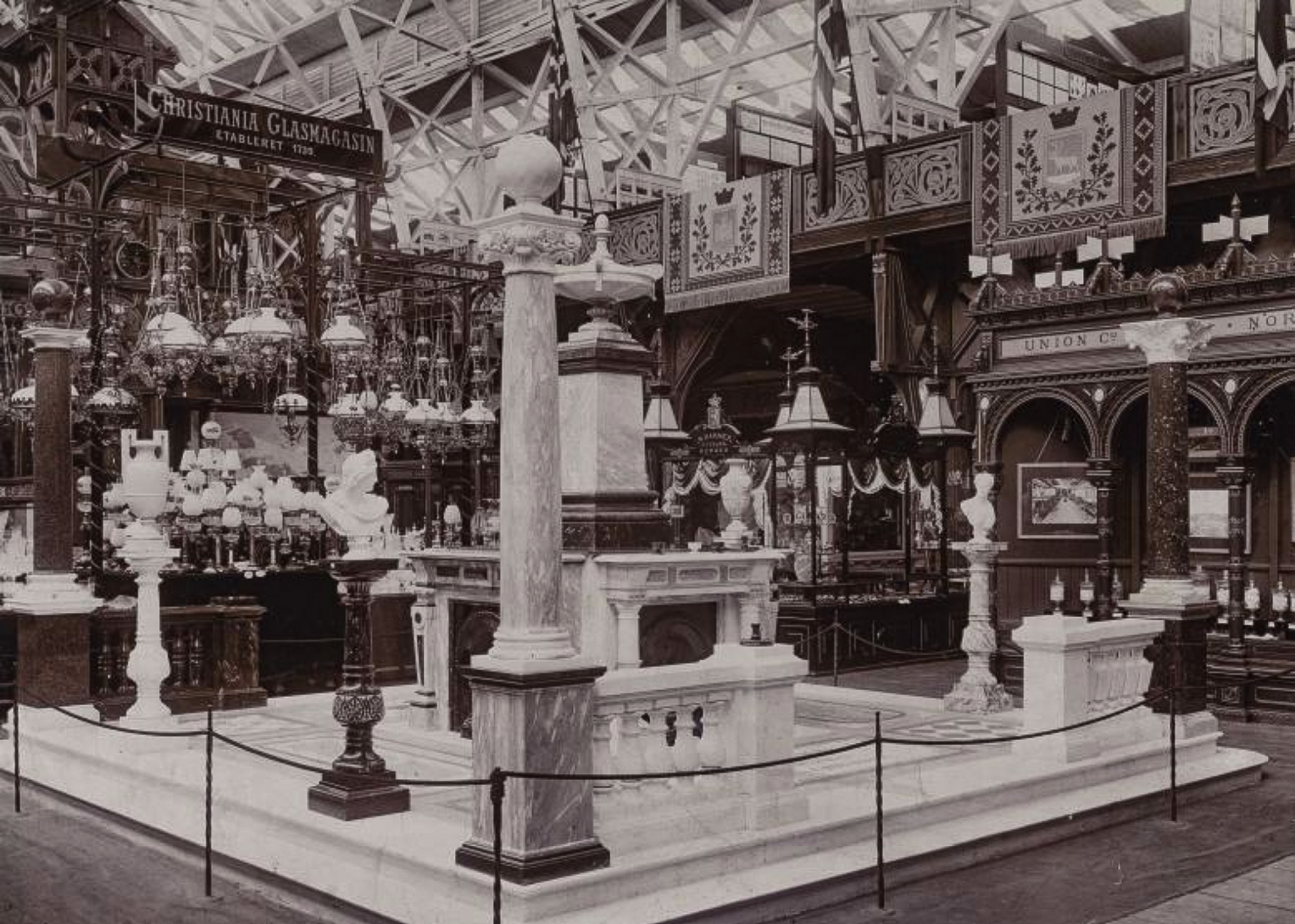
1898: Inside the main exhibition hall. Photo: UiB / Marcus
Electricity was a central theme of the exhibition, still something new in Bergen at the time. All the buildings were lit with electric light, and electric street lamps were installed outdoors.
Several conferences were held in connection with the exhibition, including an international fisheries conference organised by Lehmkuhl.

After the exhibition closed, all the buildings were demolished and the area again became a public park. New national exhibitions were later held in 1910 and 1928, this time in the city park near Permanenten.

Entering politics
Towards the end of the 1800s, Lehmkuhl entered politics. He represented the Conservative Party in Bergen’s city council, and served on the city’s executive committee, the body that runs the city’s day-to-day affairs. For a time he was deputy mayor while his brother-in-law Christian Michelsen was mayor.
In 1899, the city council debated where Bergen’s new hospital should be built. Doctors on the planning committee recommended three smaller hospitals in the city centre. Lehmkuhl disagreed. He believed the city would grow southwards and proposed building one large hospital on the fields of the farm Haukeland, where there would be room to expand. His proposal was accepted, and Haukeland Hospital opened in 1912.
In 1902, his father-in-law Jakob Michelsen died. As head of the Bergen Stock Exchange, he had been at the centre of Norwegian and international business life. Kristofer Lehmkuhl took over the position and served as stock exchange commissioner until 1912.

Cabinet Minister
In 1903, Lehmkuhl was elected to the Norwegian Parliament. He became known for speaking clearly and directly. His brother-in-law Christian Michelsen led the negotiations that dissolved the union with Sweden in 1905, became prime minister - and appointed Lehmkuhl as Minister of Labour.

Lehmkuhl left the government in 1907 and did not seek re-election. The story goes that he did not enjoy life in Kristiania, as Oslo was then named, and wanted to return to his beloved Bergen.
Back home, the most important chapter of his later life began. In 1908, at the age of 53, he joined the board of the shipping company Det Bergenske Dampskibsselskab (BDS). In 1912, he became managing director.
Det Bergenske Dampskibsselskab (BDS)
When Lehmkuhl joined BDS, the company transported passengers, mail, and cargo between Western Norway and Hamburg, Great Britain, and the Baltic Sea. Together with the shipping company Nordenfjeldske Dampskipsselskap in Trondheim, BDS operated the Hurtigruten route, which still runs along the Norwegian coast between Bergen and Kirkenes.

Lehmkuhl had big ambitions. He ordered new ships, strengthened cooperation with Nordenfjeldske, and established the Norwegian South America Line. New routes to Iceland and the Faroe Islands were also opened.
He cared deeply about how the company presented itself. BDS had a small office at Bradbenken by the harbour, while its main office was on Torgallmenningen in the city centre. Lehmkuhl felt this was too modest. In 1913, he had a large office building constructed at Bradbenken, designed to be the most impressive building seen by ships entering the harbour.
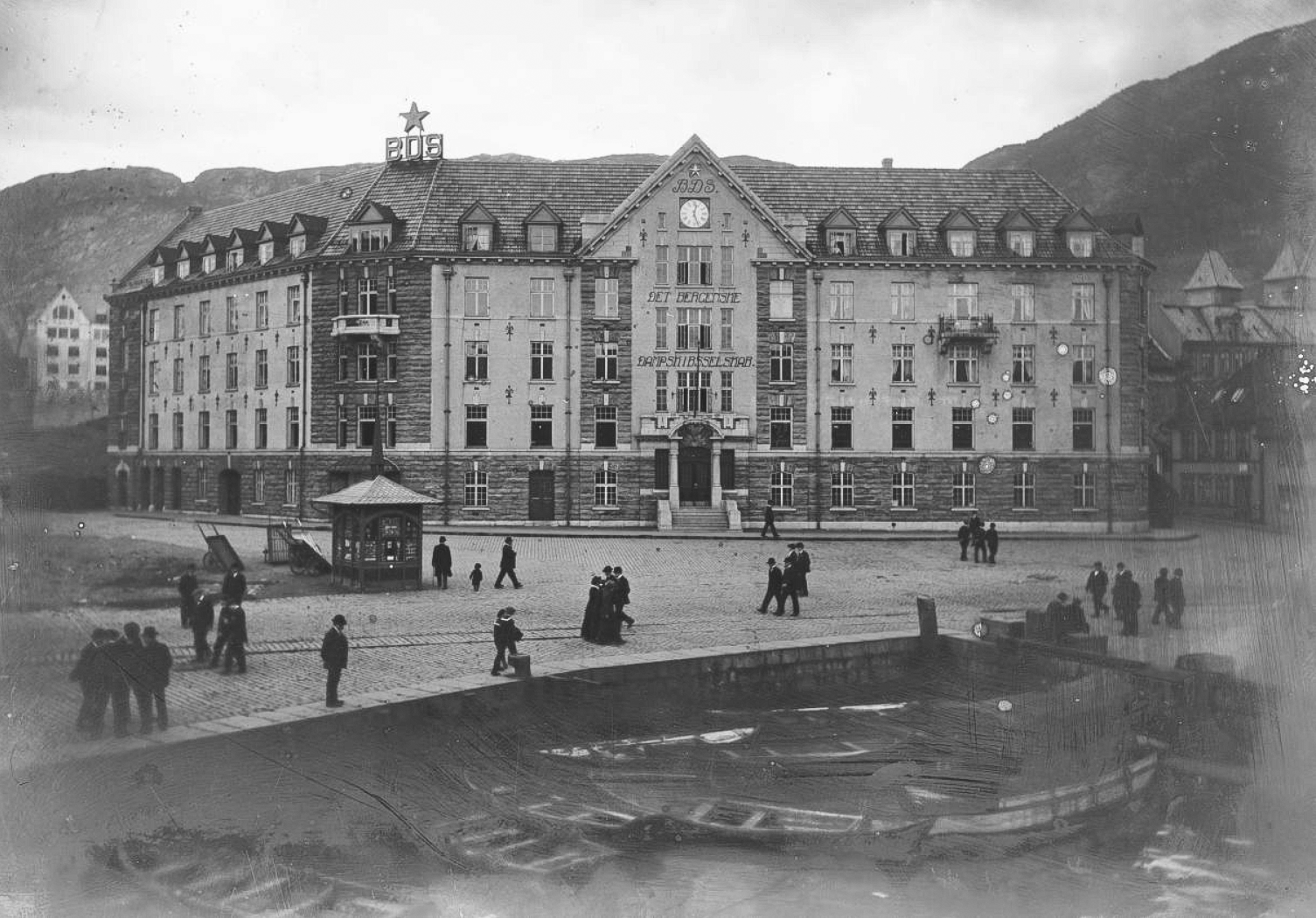
1913: The new BDS main office. Photo: UiB / Marcus
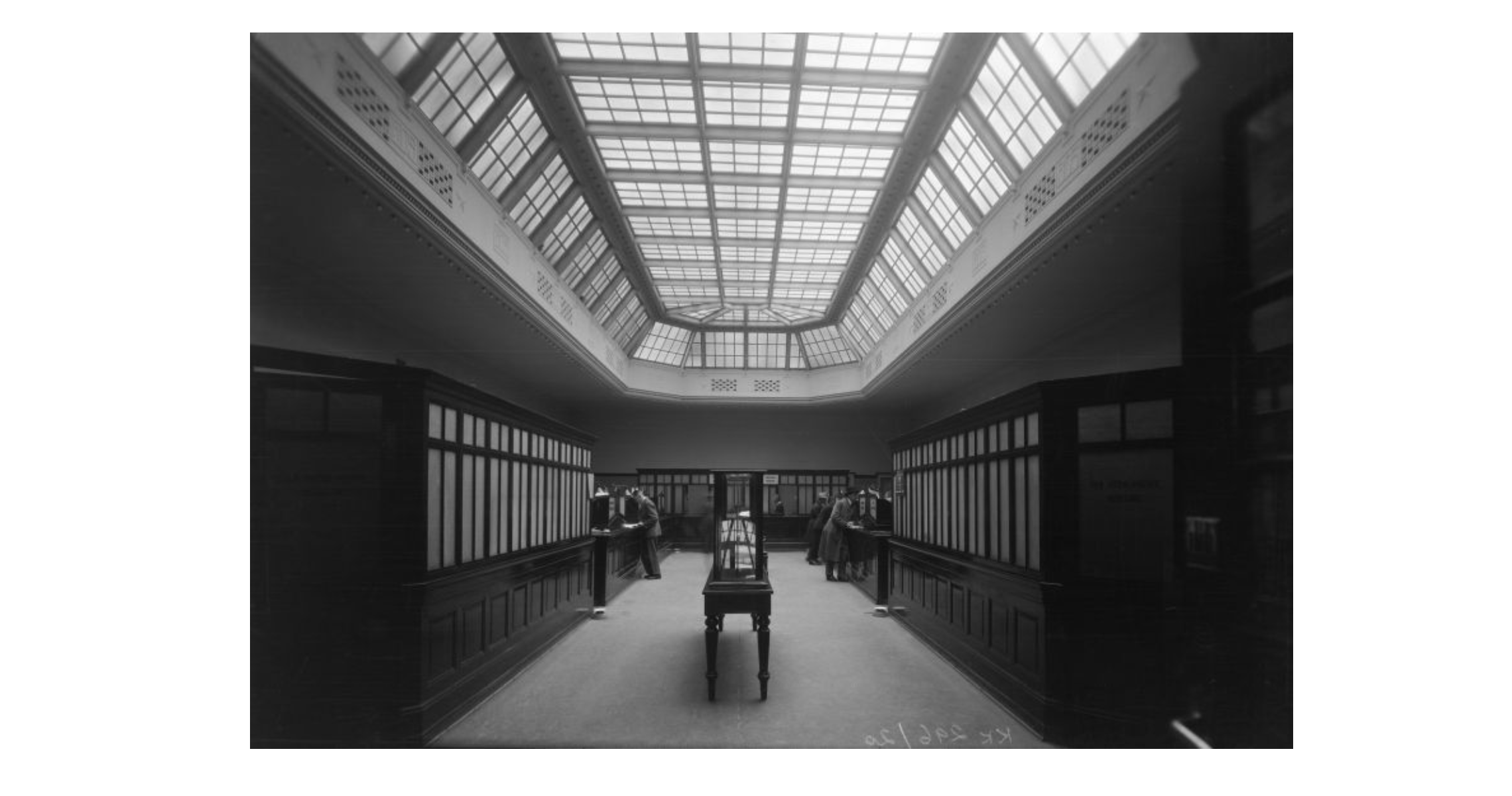
1921: The BDS main office, reception area. Photo: UiB / Marcus
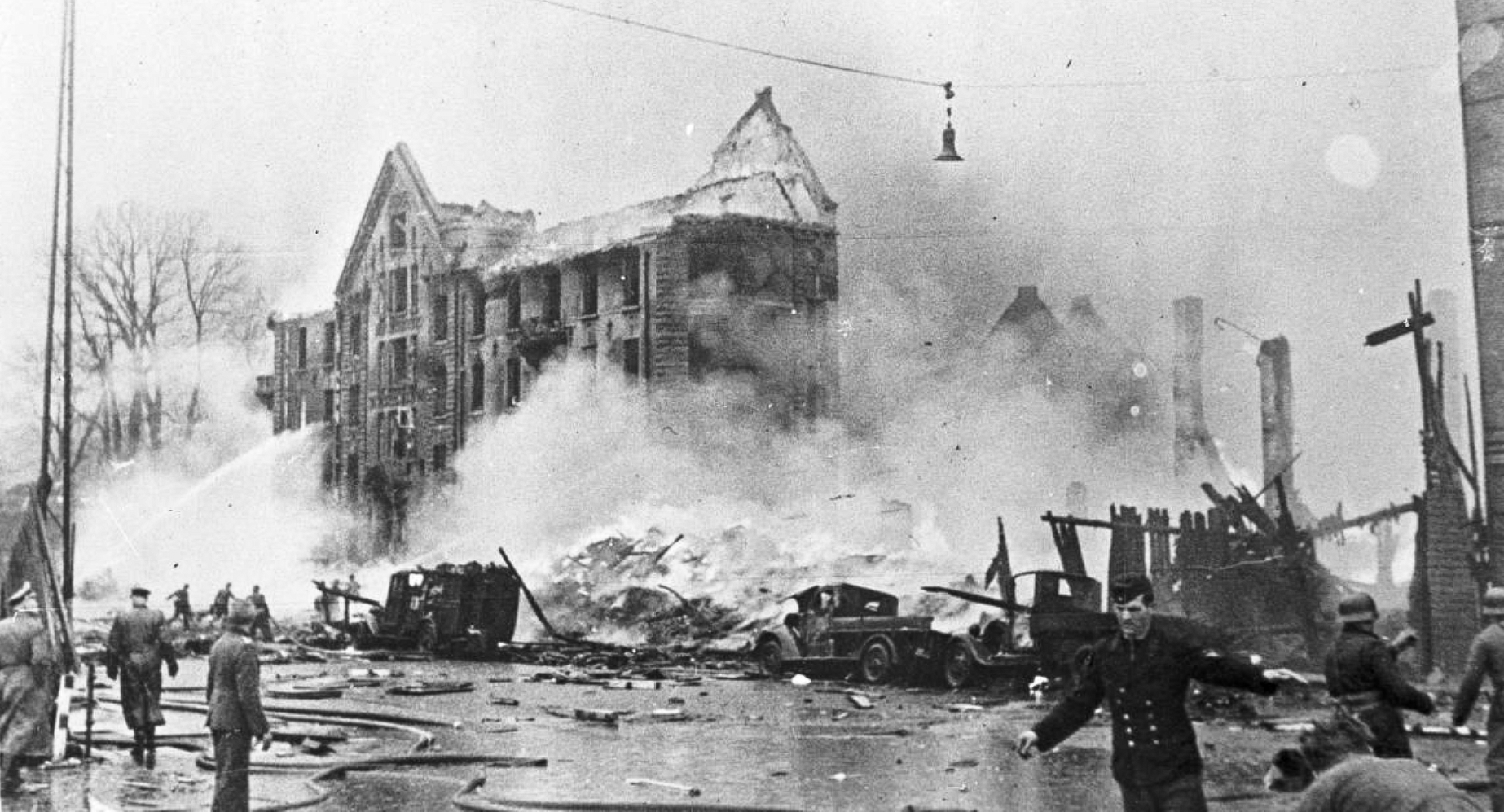
1944: The BDS main office in ruins after the explosion. Photo: UiB / Marcus
Sadly, the building was destroyed in 1944 when a German cargo ship exploded in the harbour during the Nazi occupation of Norway.
The Norwegian America Line
Lehmkuhl played a key role in establishing the Norwegian America Line in 1910. After Norway gained independence on June 7 1905, building national institutions was important. The shipping line became the first major combined governmental and private project, partly financed also by the large Norwegian immigrant population in the United States. Lehmkuhl wanted Bergen to become a main link between Norway and the United States, with BDS acting as the company’s Norwegian agent.

The first ship, Kristianiafjord, sailed on its maiden voyage across the Atlantic in 1913. The journey started in Kristiania, with stops in Kristiansand, Stavanger, and Bergen. From Bergen, the ship sailed to New York on 7 June, a date of great symbolic importance. On board were King Haakon, the entire government, members of parliament, and journalists.

Only a few months later, Bergensfjord began regular service between Bergen and New York. This was a great honour for both the city and Lehmkuhl. BDS handled all mail, passengers, and cargo.
The following year the world changed dramatically.
The First World War
The First World War broke out in 1914 and had a major impact on shipping in Europe. Before the war, BDS and Nordenfjeldske operated three to four weekly sailings between Bergen and Newcastle. Nordenfjeldske wanted to reduce services because of the danger from mines, but Lehmkuhl wanted the opposite – daily sailings.
He saw a new opportunity.
Before the war, traffic between Russia, France, and Great Britain passed through Germany. The war cut Europe in two. With Germany and France at war, the fastest route between Britain and Russia now went through Scandinavia. Lehmkuhl wanted to move ships into the Bergen–Newcastle route to carry passengers and, especially, mail. He needed financial guarantees from the Norwegian government, and he obtained them.
Britain also became involved. Plans were made for a route from Petrograd through Stockholm and Gothenburg to the UK. Negotiations were scheduled in Petrograd in November 1914. Lehmkuhl learned of them through the Norwegian consul and travelled to Petrograd himself. He argued that Bergen was a better hub than Gothenburg. Despite Swedish opposition, he succeeded.
Bergen became the centre of a new international transport network.

The traffic created serious practical problems. Mailbags flooded the city, piling up along the quays and overwhelming the postal terminal. It was clear that Bergen lacked capacity. Still, Lehmkuhl wanted to carry on. He believed this traffic would continue after the war, as Russians would avoid travelling through Germany and prefer Scandinavian routes.
His vision ended with the Russian Revolution in 1917. When the Soviet Union was established, most transit traffic through Bergen stopped.
From Grossherzog Friedrich August to Statsraad Lehmkuhl
After the First World War, several German ships were handed over to the Allies as war reparations and later sold. In 1921, BDS bought one of them from the British – Meteor, a former German cruise ship.
The British had also taken control of the three-masted barque Grossherzog Friedrich August. The ship had been launched just before the war and was built as a training ship for the German merchant fleet.

Several Norwegian cities already had training ships, Bergen too, the corvette Alfen. Alfen had room for only 65 students, and Lehmkuhl wanted a larger ship, bought Grossherzog Friedrich August, and brought it from Newcastle to Bergen in 1921.
The ship remained moored in Bergen for two years. But in 1923, Lehmkuhl succeeded in persuading the Norwegian Shipowners’ Association, where he was a board member, to take over the vessel.
It set out on a trial voyage as a training ship with 200 cadets on board, and was subsequently donated to the Bergen Training Ship Institution as a replacement for the then 66-year-old Alfen.

The Bergen Shipowners’ Association wanted to name the new training ship after Lehmkuhl. Kristiania’s training ship, Statsraad Erichsen, was much smaller. Lehmkuhl was proud that Bergen would have a larger and more impressive vessel and accepted the honour.
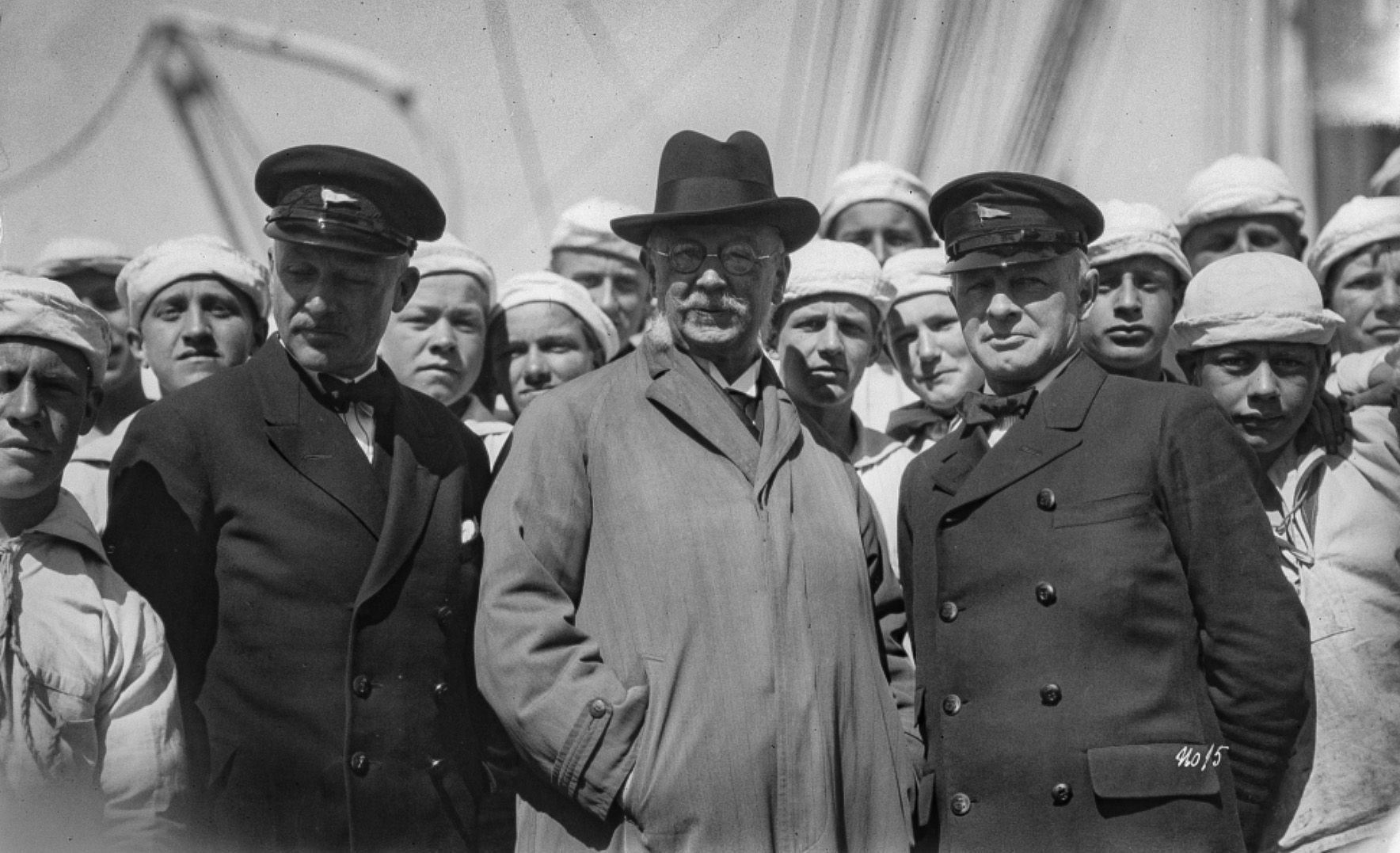
Kristofer Lehmkuhl on board Statsraad Lehmkuhl in 1923. To the left is First Officer Z. Bryhn, to the right Captain G. Kielland. Cadets are seen behind them. Photo: UiB / Marcus
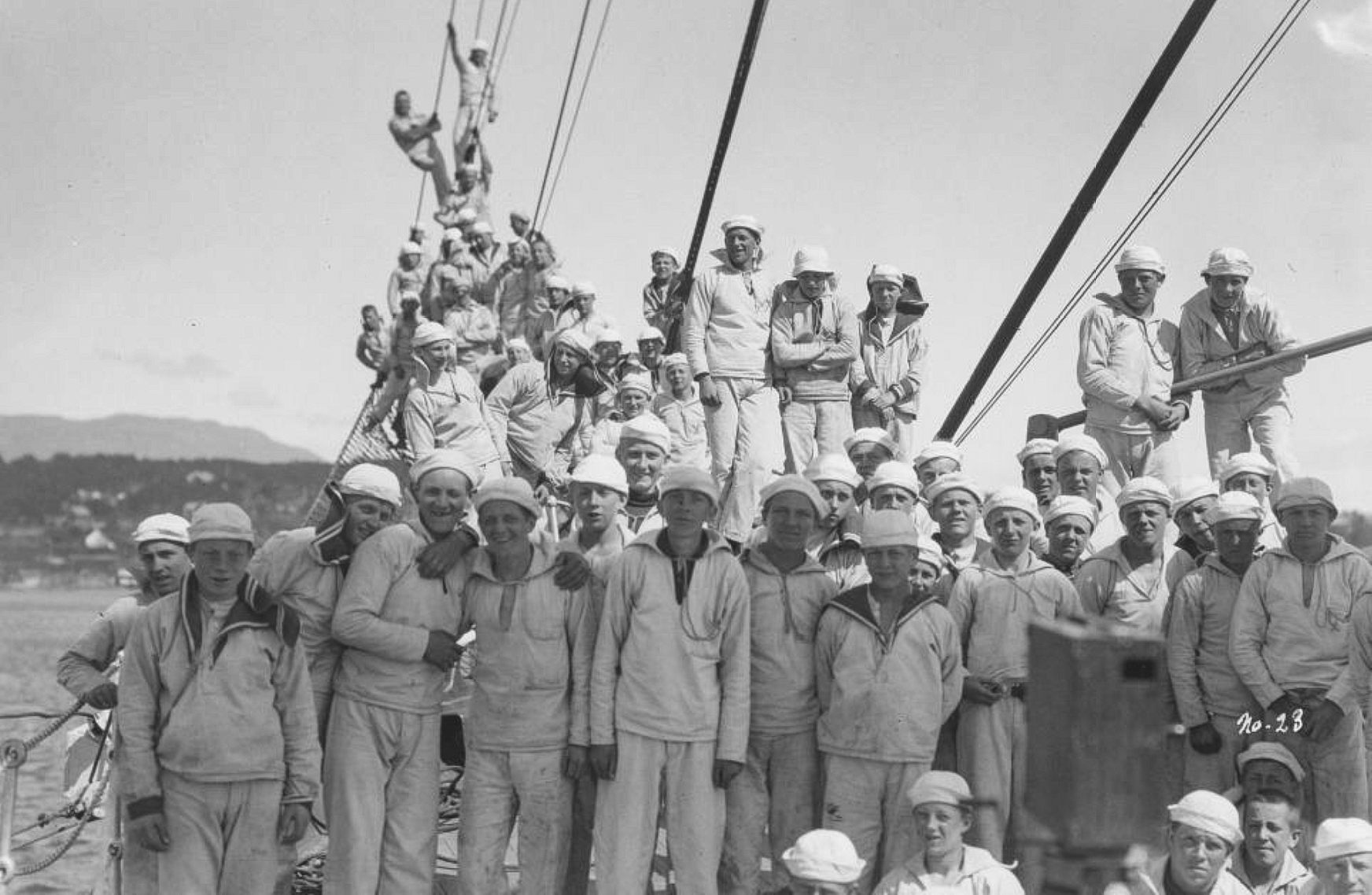
1923: Cadets lining up for a photo. Photo: UiB / Marcus
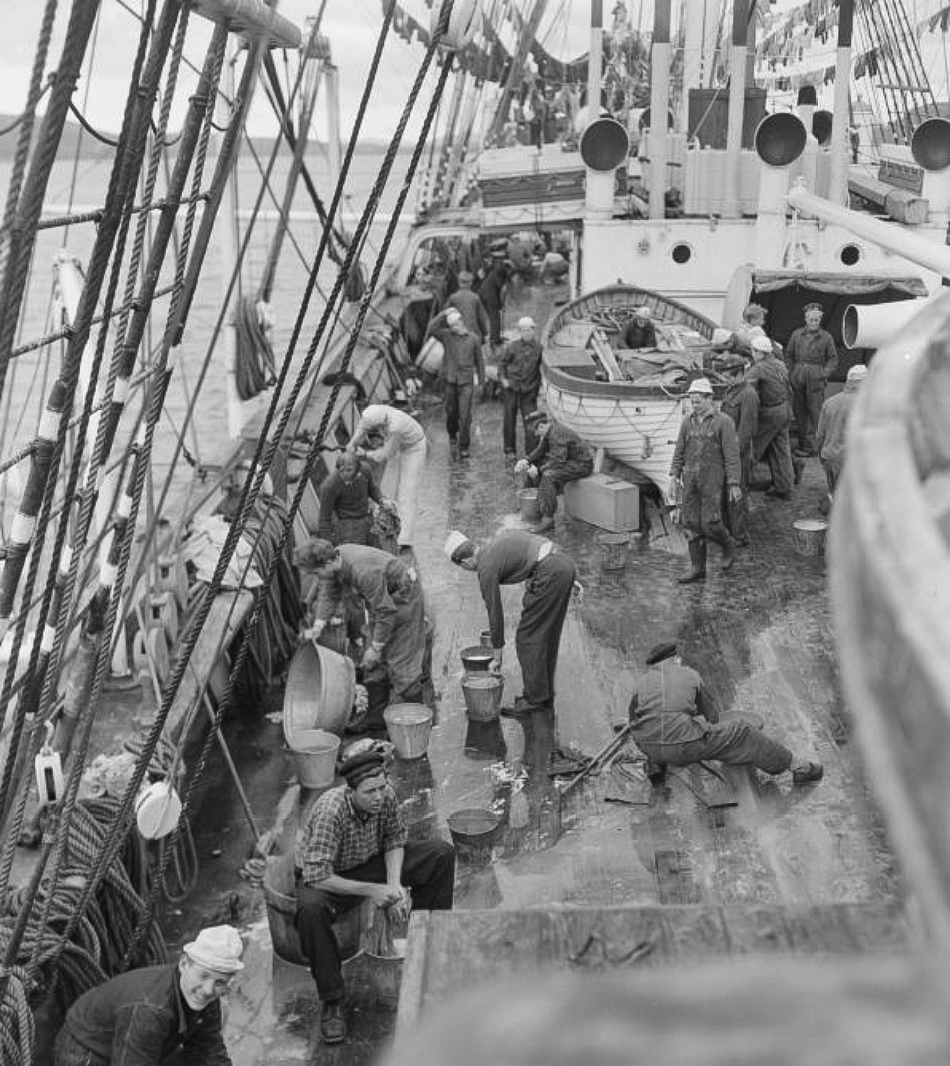
1931: Cadets working on board. Photo: UiB / Marcus
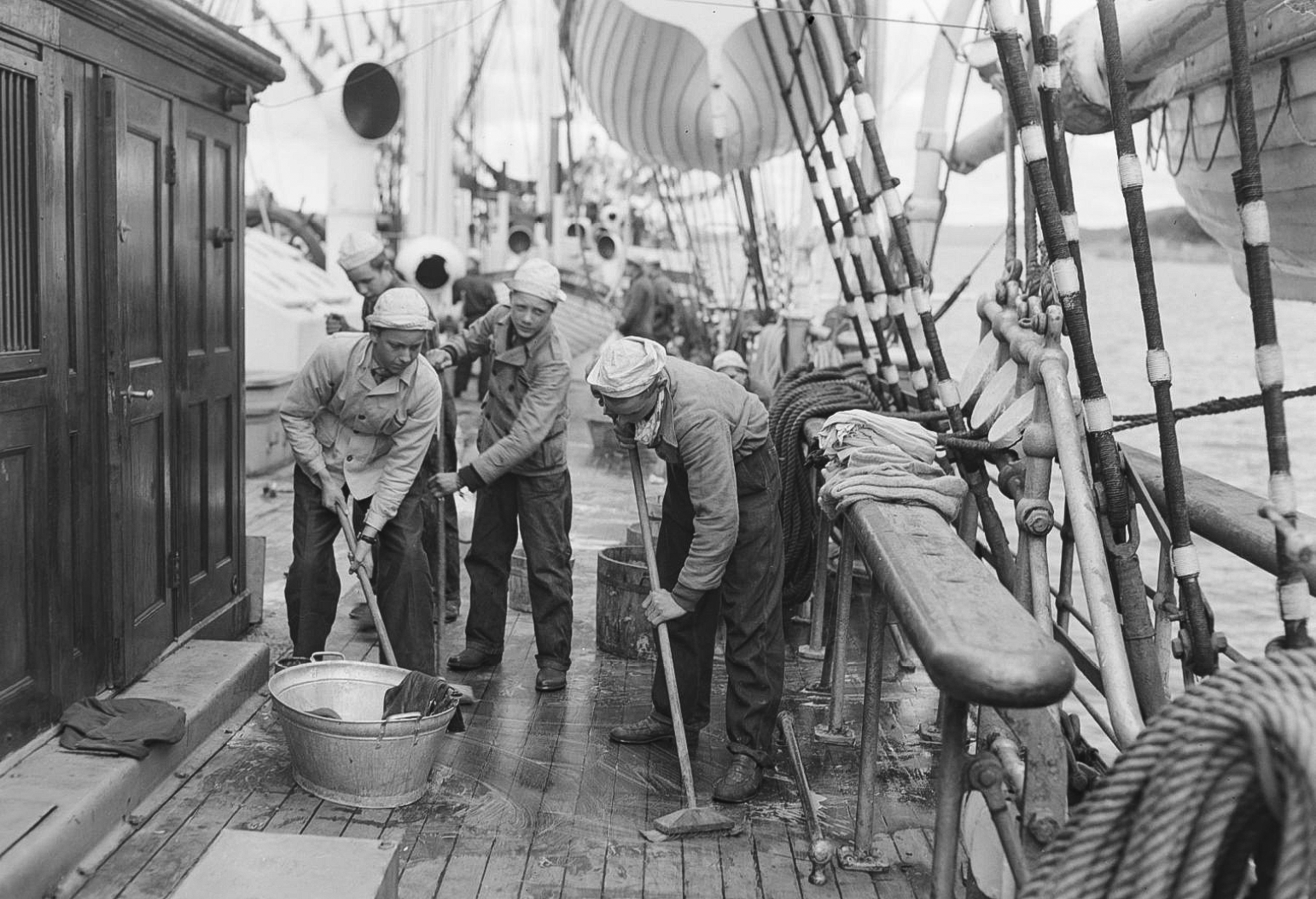
1931: Cadets working on board. Photo: UiB / Marcus
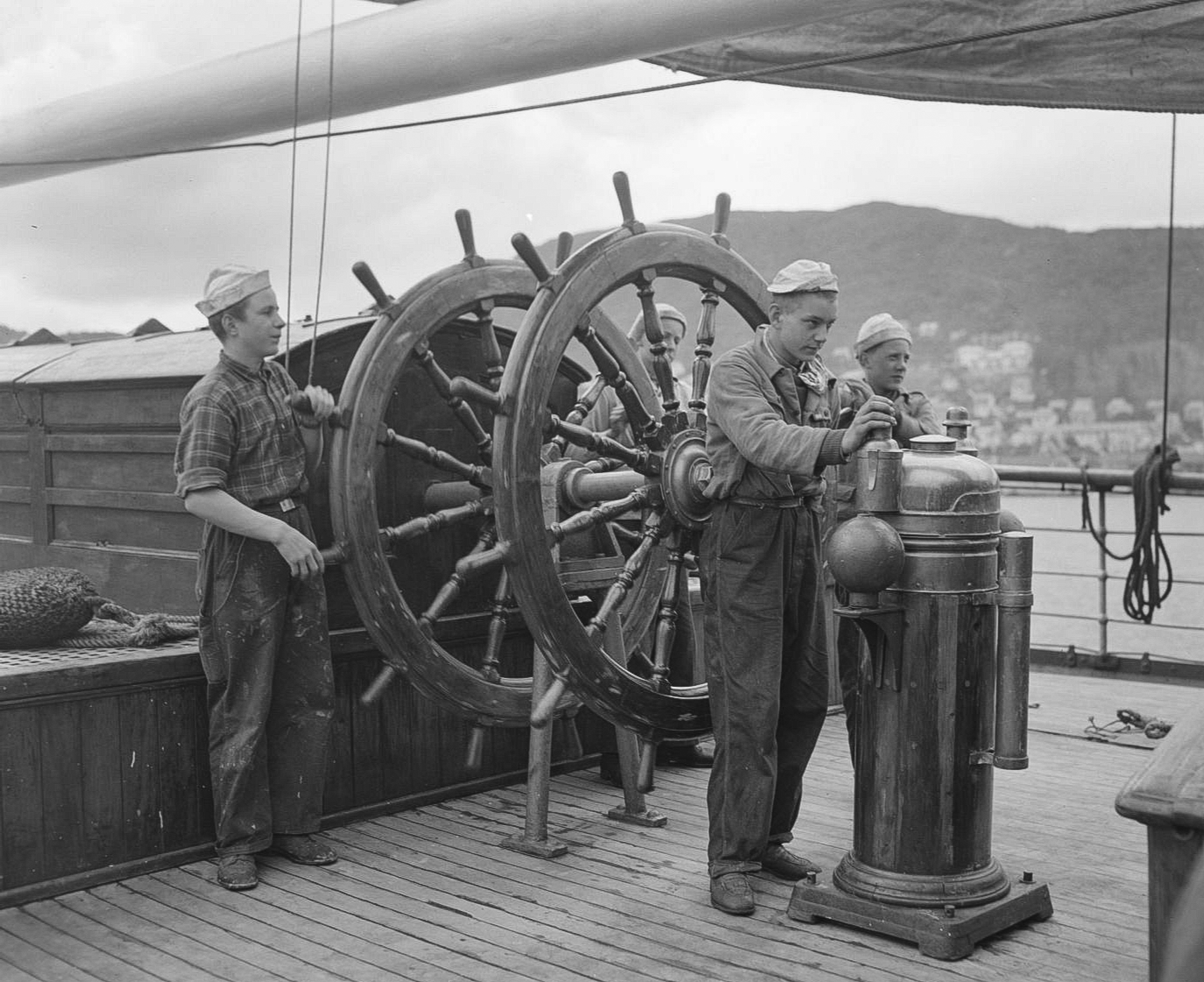
1931: Cadets working on board. Photo: UiB / Marcus
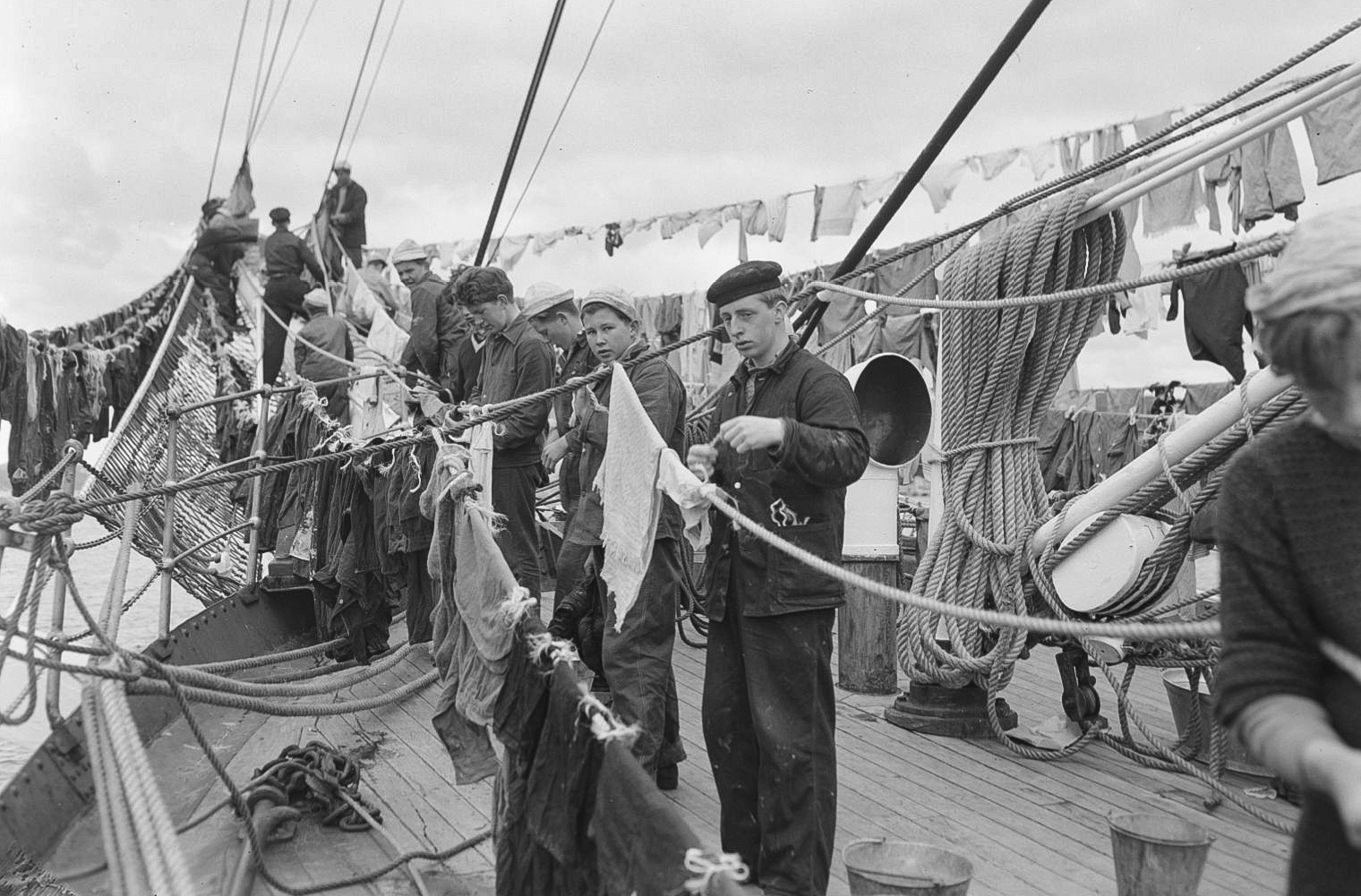
1931: Cadets working on board. Photo: UiB / Marcus
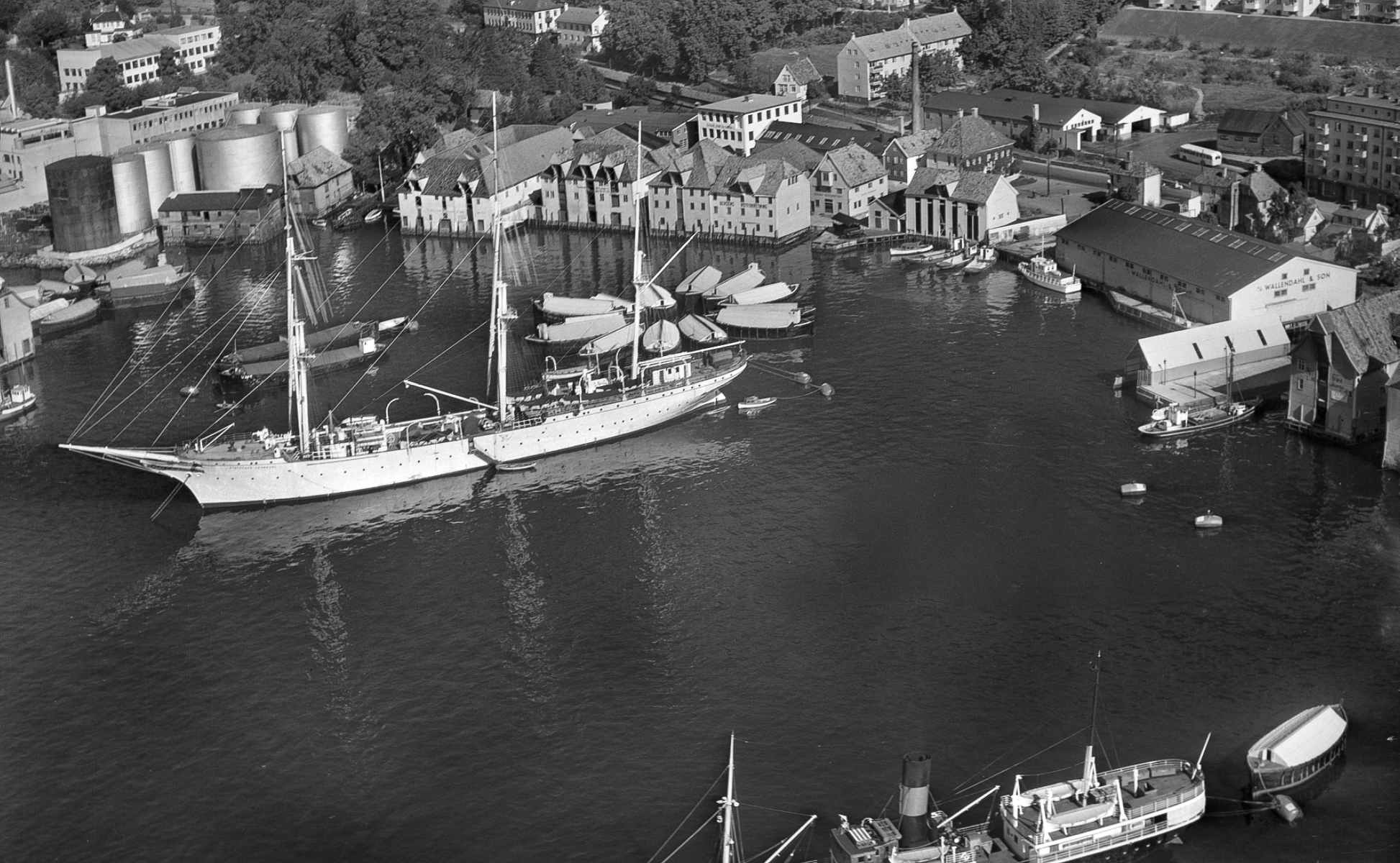
1958: Statsraad Lehmkuhl moored in Sandviken, just north of the city center. Photo: UiB / Marcus
Since then, Statsraad Lehmkuhl has been an important symbol of Bergen’s maritime identity. The ship has a permanent berth at Bradbenken, where BDS once had its headquarters.
Cruise shipping
After the First World War, passenger traffic changed. The United States introduced strict immigration laws in 1921 and 1924, reducing the need for large emigrant ships. Shipping companies had to find new uses for their vessels.
Cruising became increasingly popular during the 1920s. Many emigrant ships were converted into cruise ships, with new travel classes such as “cabin class” and “tourist class”.
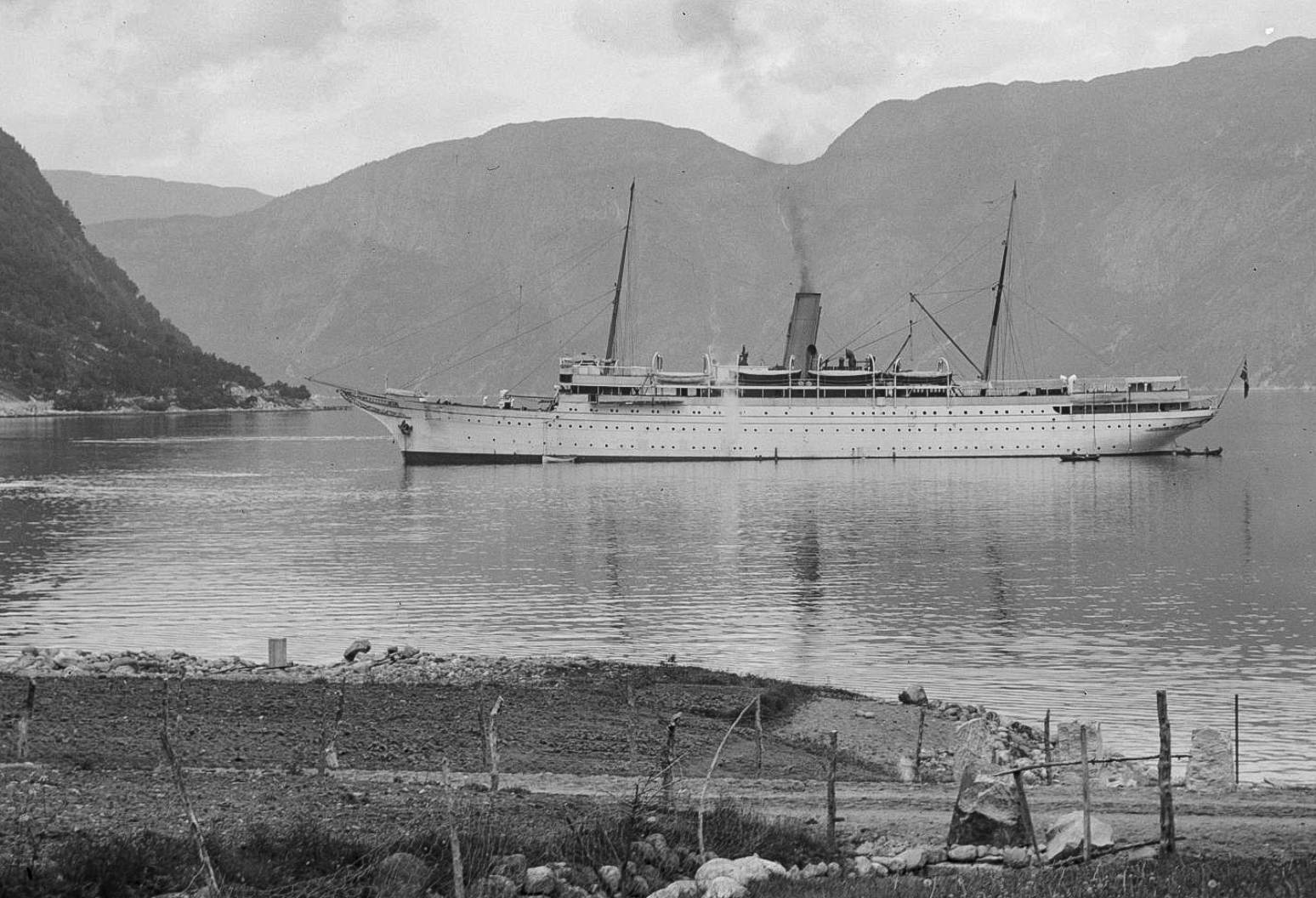
1930: Meteor in Eidfjord, western Norway. Photo: UiB / Marcus
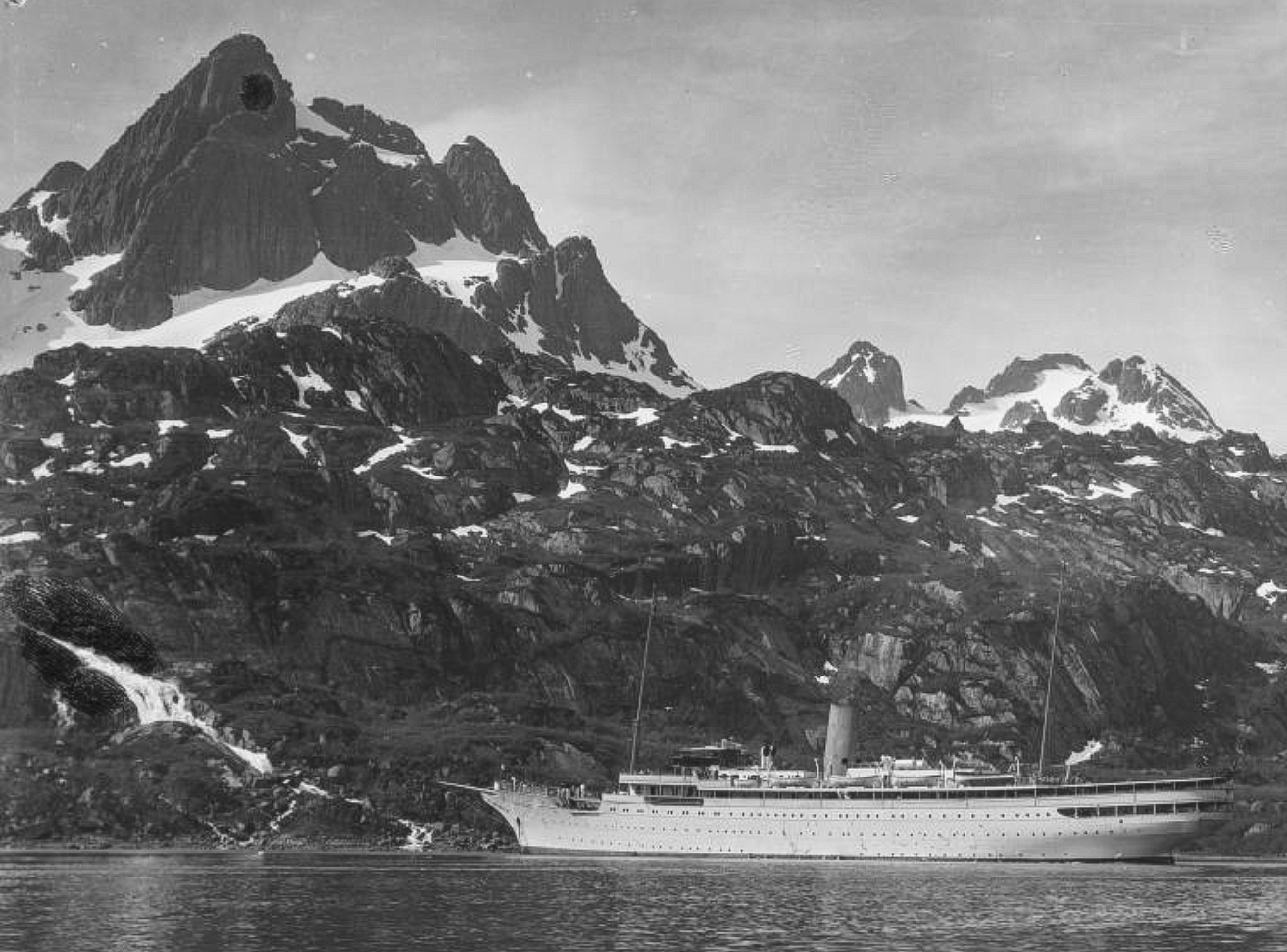
1928: Stella Polaris in Troldfjord, northern Norway. Photo: UiB / Marcus
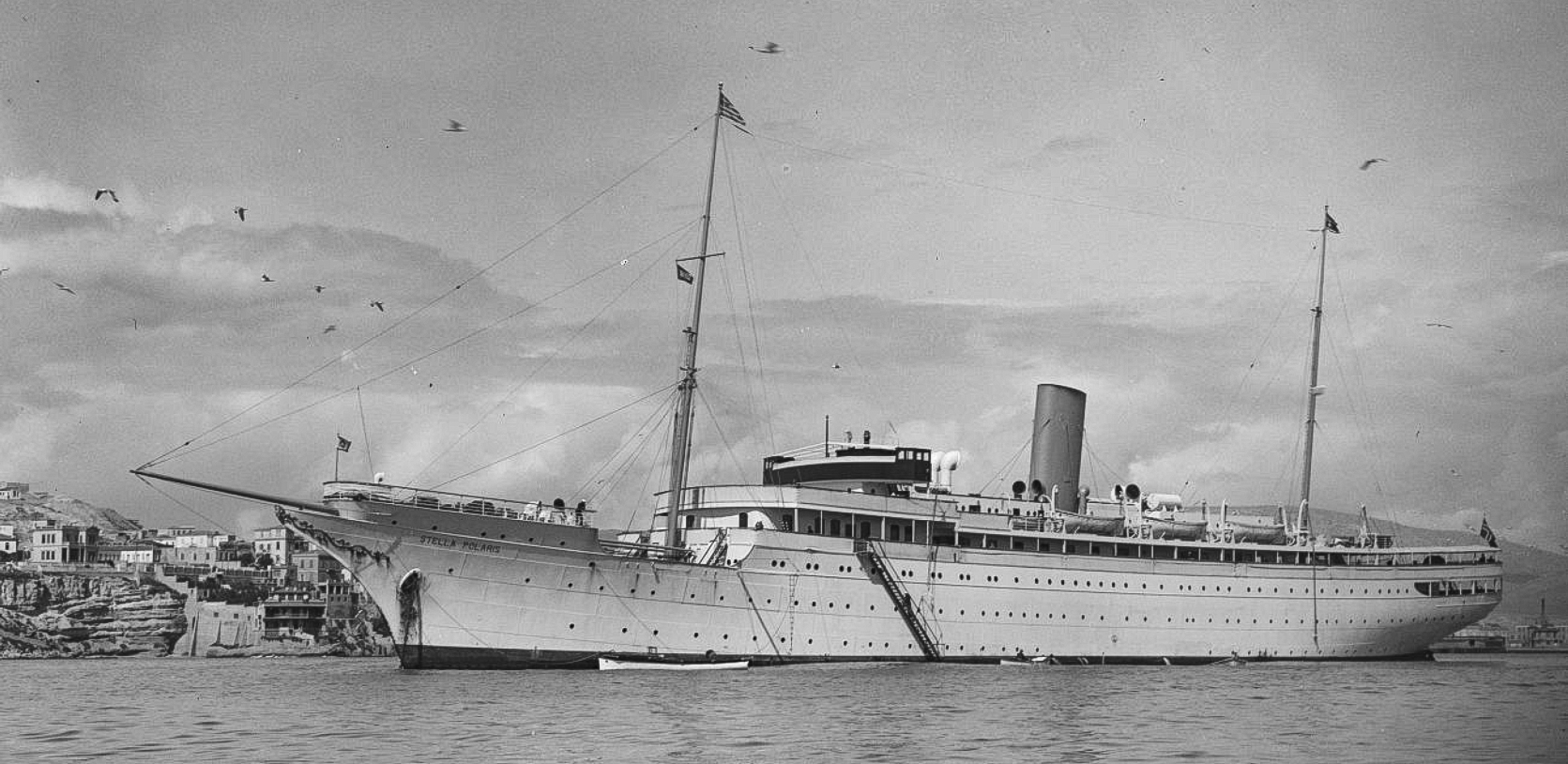
1930: Stella Polaris at Phaleron Bay, Hellas Photo: UiB / Marcus
BDS used Meteor for cruising, and in 1927 built the luxurious Stella Polaris, designed specifically for cruise travel. Strong marketing efforts made the ship an icon of Norwegian cruising.
Even so, Lehmkuhl continued the England service between Newcastle, Norway, and Sweden. He wanted passengers from Eastern Norway as well. For a time, trains ran directly from Kristiania to ships moored at the quay Skoltegrunnskaien through a new tunnel behind Bryggen.
In 1931, the ship Venus was launched for this route. On its delivery voyage from the shipyard in Helsingør, the ship first visited Oslo, where the king, Lehmkuhl, and other distinguished guests came on board.
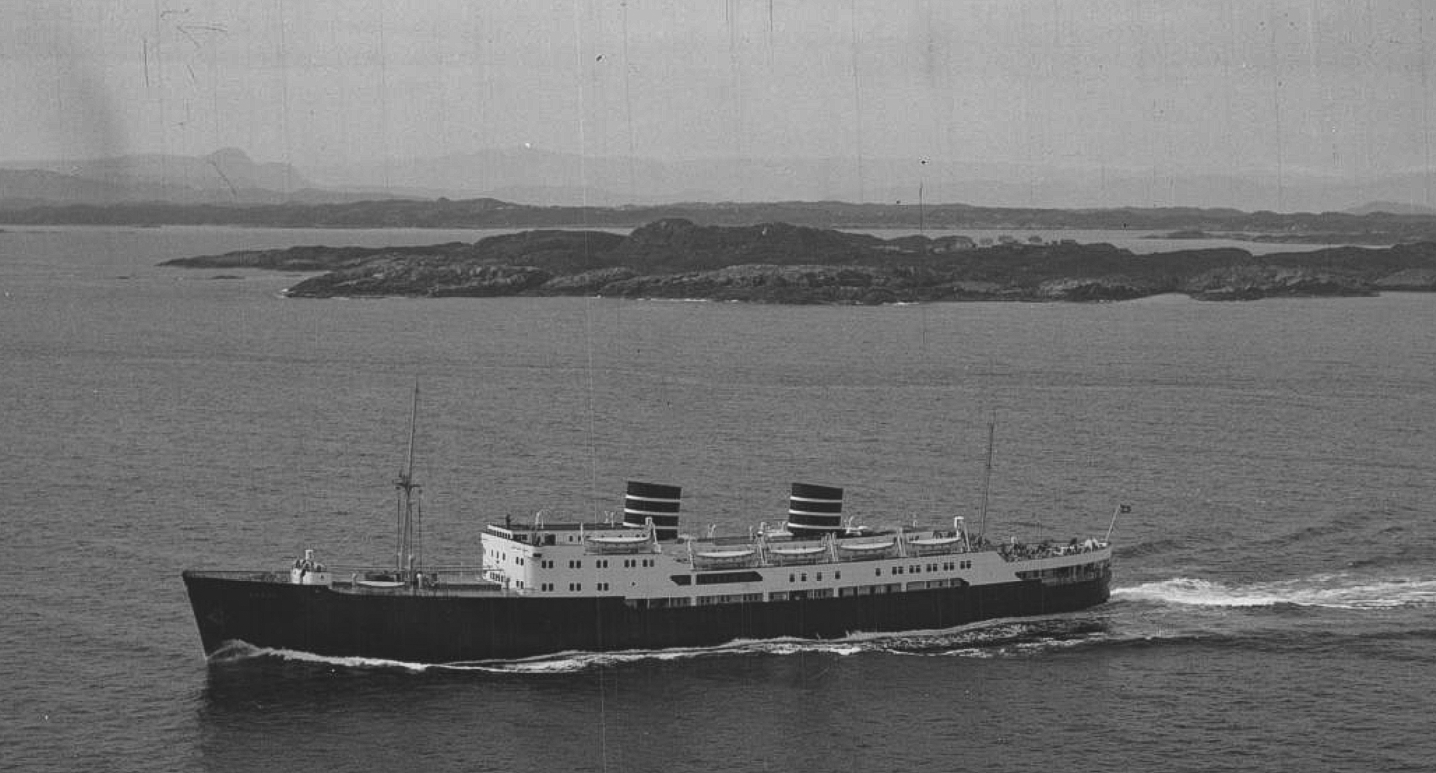
1931: Venus
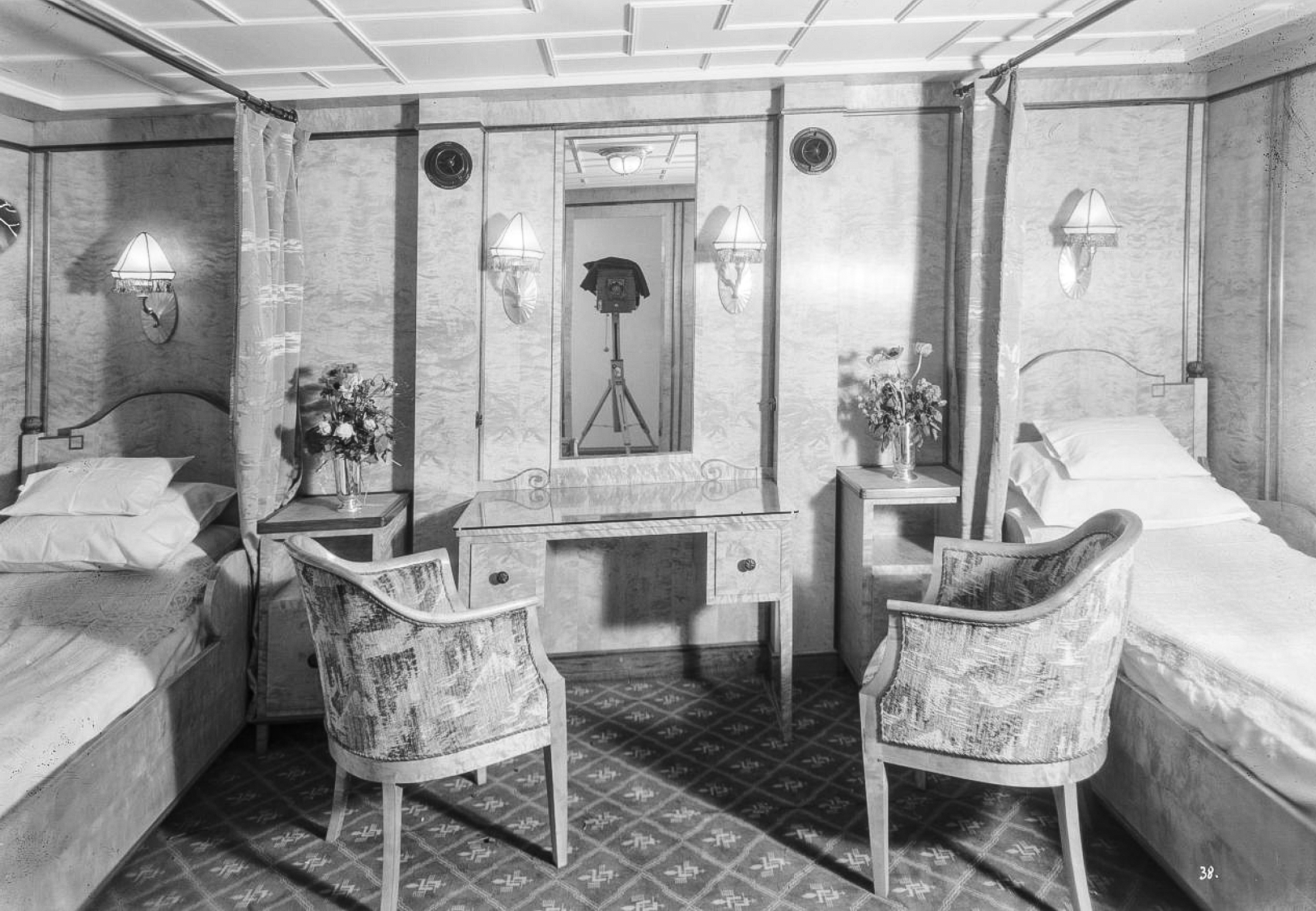
1931: One of the Venus cabins. Photo: UiB / Marcus
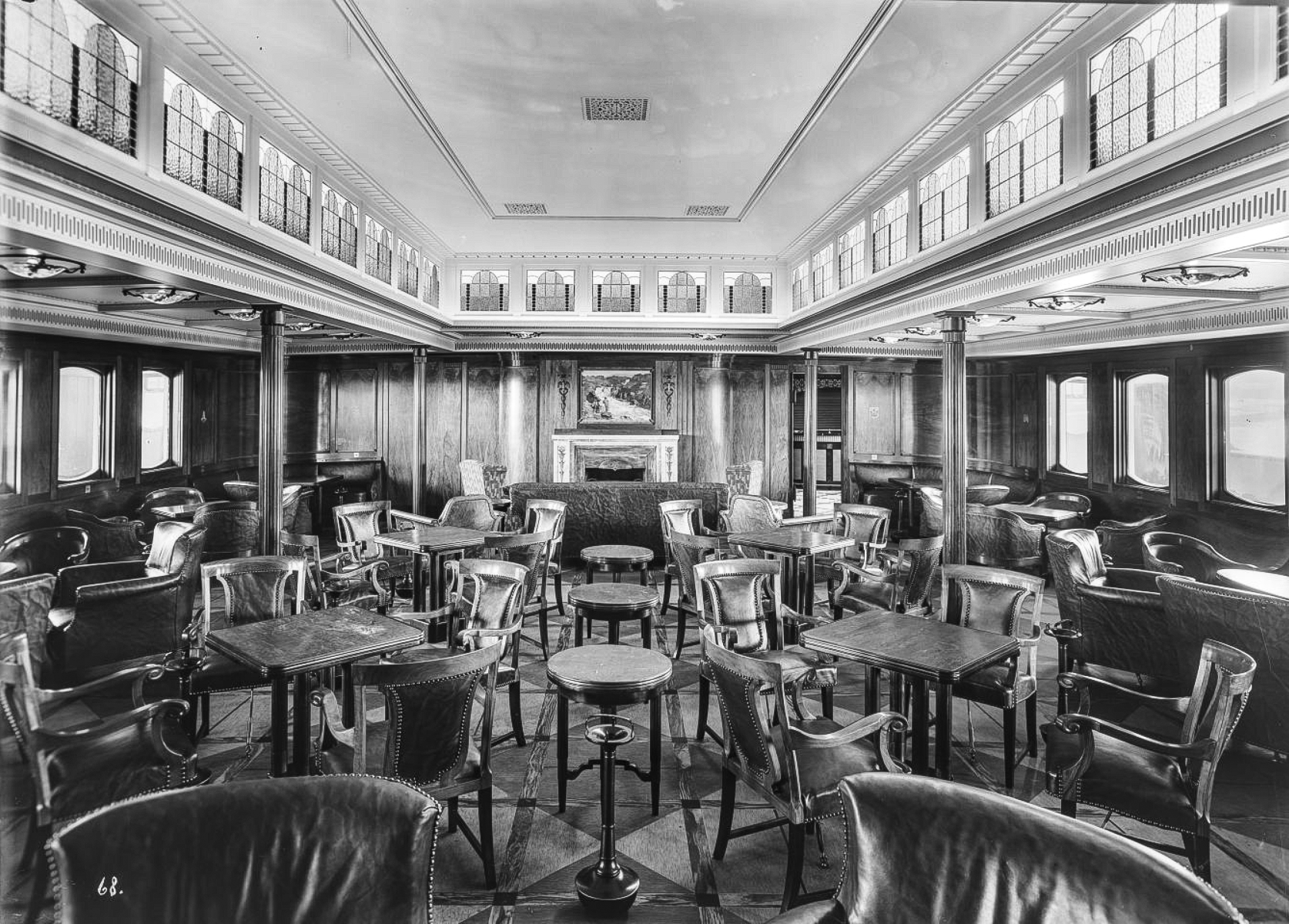
1931: One of the lounges on board Venus. Photo: UiB / Marcus
The Norwegian School of Economics
In the late 1800s, Bergen’s business community wanted a school that taught commerce and economics. Two committees were formed, and Lehmkuhl served on both. Despite difficult economic conditions, he secured the funding needed. Bergen Commercial School opened in 1904.
Lehmkuhl continued his efforts and became a leading force behind establishing a university-level business school in Bergen. He chaired the association working to create the Norwegian School of Economics (NHH) and raised large sums of money for the project.

Lehmkuhl had close ties to the royal family. When his brother-in-law Christian Michelsen died in 1925, Lehmkuhl proposed that Michelsen’s large villa, Gamlehaugen, become the royal residence in Bergen. Perhaps a “thank you for your help”? The king was among those who supported the decision in 1917 to locate NHH in Bergen.
It was not until 1936 that NHH finally became a reality. The economic crisis of the 1930s delayed the project. When the school opened, it was housed in a converted villa at Nygårdshøyden, close to Lehmkuhl’s own home.

Aviation is the future
Lehmkuhl understood early that aviation was the future. Together with the shipping company Fred. Olsen & Co., BDS established the airline Det Norske Luftfartselskap. The shipping companies provided sufficient funding, and the airline began domestic flights in 1935 on the route Oslo - Moss - Arendal -Kristiansand - Stavanger - Haugesund - Bergen.

In 1946, Det Norske Luftfartselskap merged with the Danish and Swedish national airlines to form SAS.
By the late 1930s, Lehmkuhl was an elderly man, but he continued working at Det Bergenske Dampskibsselskab until retiring in 1936 at the age of 80. He remained active in Bergen’s financial and business life throughout the decade.

Kristofer Lehmkuhl died in 1949 at the age of 94.
What happened to the Lehmkuhl family?
Many of the families that Kristofer Lehmkuhl was part of, and friends with, are still well-known names in Bergen and Norway. The Lehmkuhl name, however, is now mostly associated with the sailing ship Statsraad Lehmkuhl. The war must take much of the blame for that.

Kristofer Lehmkuhl had two sons, Joakim and Herman Kristoffer.
Herman, born in 1887, became a journalist and later editor of the newspaper Verdens Gang. In 1924 he moved to London as a correspondent for the newspapers Tidens Tegn and Aftenposten.
During the war he worked at the information office of the Norwegian government-in-exile there. Herman did not move back to Norway when the war was over. He served as press counsellor at the Norwegian embassy and remained in London until his death in 1968.
In his father’s footsteps
Joakim, born in 1895, was the son who followed most closely in his father’s footsteps.
He studied engineering and management at Harvard and the Massachusetts Institute of Technology in the United States. In 1919 he returned to Bergen, two years after the Russian Revolution. With him, he brought a strong desire to modernise and rationalise Norwegian industry and working life - and a deep opposition to communism and socialism.
Joakim became politically active, though not through an established party like his father. In 1925 he took the initiative to establish Fedrelandslaget (the Fatherland League), an organisation intended to oppose the labour movement while promoting modern ideas about how industrial production should be organised. Among those who joined him were the famous polar explorer Fridtjof Nansen and his uncle, former prime minister Christian Michelsen.
During the 1930s, Fedrelandslaget gradually became more radical and lost much of its influence. Several of its leaders, including Vidkun Quisling, later became prominent Nazis during the German occupation of Norway from 1940 to 1945.
Joakim Lehmkuhl stepped down as leader of Fedrelandslaget in 1933 and instead focused on the company he had established in 1926. His firm, Ingeniør Joakim Lehmkuhl, produced ship radios and held the agency for refrigeration technology from General Motors.
Escape to the United States
When Nazi Germany invaded Norway in 1940, Joakim Lehmkuhl and his family fled to the United States aboard the cargo ship MS Bomma. Also on board was part of the Norwegian central bank’s gold reserves, which the Norwegian government had managed to evacuate from Oslo during the dramatic days of April 1940.
The ship belonged to the shipping company Fred. Olsen & Co. Fred. Olsen’s father, Thomas Olsen, was a close friend of Joakim. Together they purchased the American company Waterbury Clock Company and began producing mechanical triggers and other instruments for the Allied war industry.
This brought Lehmkuhl a good income and a personal letter of praise from General Dwight D. Eisenhower.
Joakim Lehmkuhl remained in the United States after the war. He left the management of the Norwegian company to others and focused on converting production from wartime to peacetime manufacturing. He changed the company’s name to United States Time Corporation and concentrated on rationalising and streamlining production - in line with what he had learned as a student twenty-five years earlier.
Timex
Lehmkuhl took direct aim at the Swiss watchmakers with affordable, robust and fashionable watches that are still on the market today: Timex. The company spent large sums on television advertising, and the way it built its brand has become legendary. The Timex slogan - “Takes a licking and keeps on ticking” - has entered American popular language.

Joakim Lehmkuhl’s Norwegian business continued to grow, was later split into several companies, and expanded further. By the mid-1980s, the electronics division, where it all began, had become one of Norway’s ten largest electronics companies. In the early 1990s it eventually became part of the company ABB.
Joakim Lehmkuhl never moved back to Norway. He died in Nassau, Bahamas, in 1984.

Source: Per Kristian Sebak, lecture at the Bergen Maritime Museum, 28 January 2025.